


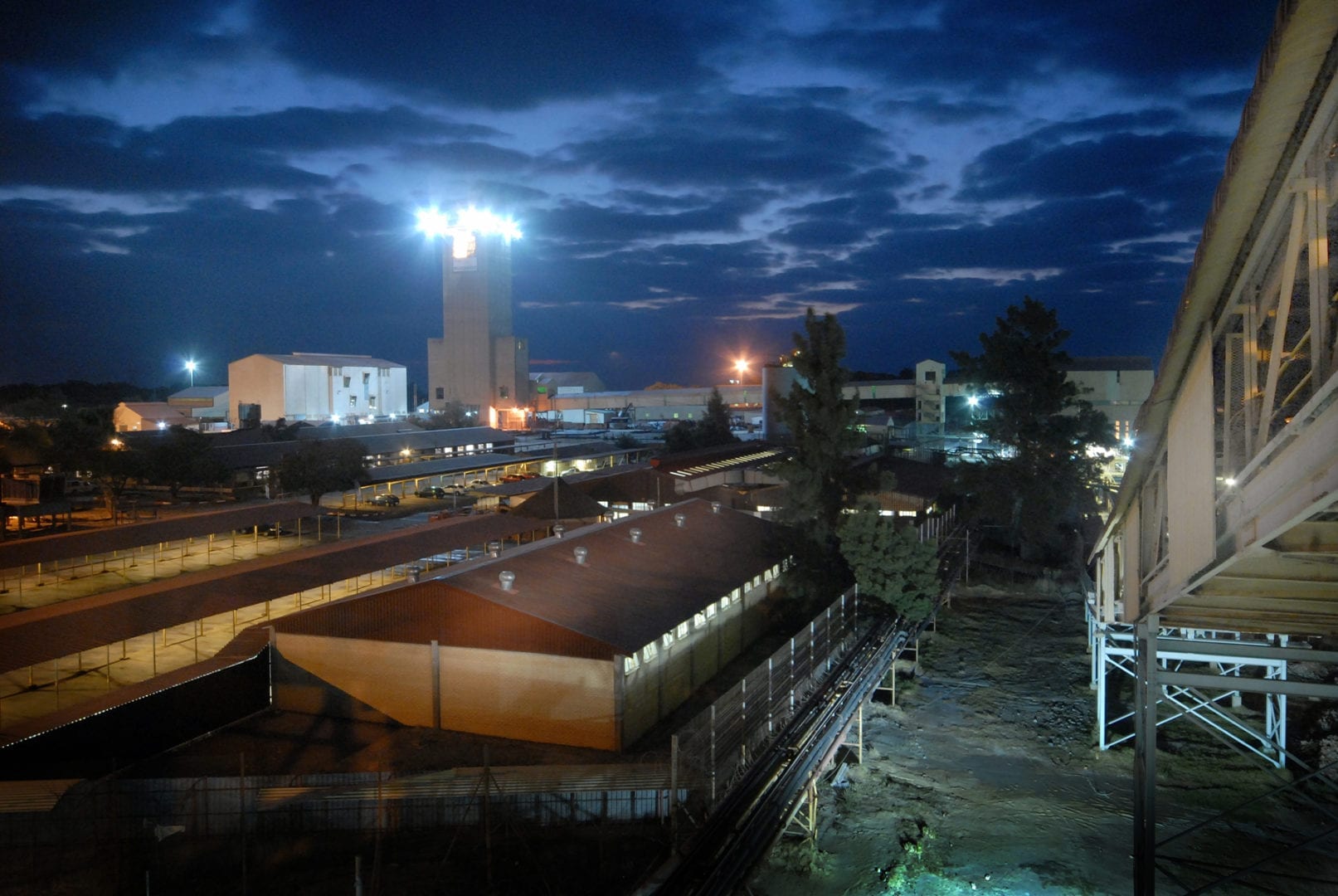
Many believe that South Africa’s deep level gold mining sector is in its twilight years as a result of rising operational costs, extreme depths and steep wage increases, and old age. The need for replacement ounces and lifespan extensions will ensure the sun doesn’t set on this industry yet, writes Laura Cornish.
While engineering and project management company TWP Projects has traditionally delivered numerous quality mining and process projects in the platinum and base metals sectors, its portfolio has expanded substantially across other commodities more recently, including gold. South Africa’s deep level gold sector is no longer in its ‘prime’, and questions regarding its future are vast, but the levels of investment and time being spent to ensure its long-term sustainability are ample. Why is gold is still opportunist? The top three gold majors alone (Harmony Gold, AngloGold Ashanti and Gold Fields (Sibanye Gold)) are spending around R3 billion a year of project capital expenditure on their deep level mines – focusing on depth and lifespan extensions and optimisation plans to keep volumes and ounces up and costs down. Rob McGill, TWP head of mining and gold portfolio manager, joined the company two years ago to drive its gold portfolio, and brought with him substantial deep level mining experience and skills, primarily from his years with AngloGold Ashanti. Having inherited a small department, McGill has overseen the establishment of a TWP Krugersdorp branch (opened just over a year ago), and already overseen significant growth within the company’s mining department and gold portfolio. “Our Krugersdorp branch allows us to be close to the gold-focused project and engineering resource base, and deliver hands-on experience and solutions to the surrounding industry whose internal engineering and EPCM expertise have been diminishing for some time. Our branch is doing extremely well and already employs about 30 staff members,” says McGill. “Contradictory to the growing outlook for the local gold sector, I believe there is still a lot of opportunity for new project work, particularly for Brownfields expansions aimed at securing and delivering replacement ounces,” McGill continues. The TWP Krugersdorp branch has already completed eight deep level project studies and seen one move into execution. McGill expects another two will follow shortly. “Considering our mines remain dedicated to investing in their assets, our intention is to take on larger roles in these projects, in terms of execution, much like what our company traditionally offers the industry in an EPCM capacity.” McGill expects the branch’s project work to continue into the future. “Because we offer a unique, tailor-made service, our strategy going forwards will include broadening our technical services and offering strategic consulting as well, which looks at ways to keep revenue up should mines ramp down towards closure.” Future outlookThe local sector was plagued with illegal strike action in 2012, which resulted in two major things –a significant reduction in revenue, which directly impacts on the amount of cash available to fund new projects internally. Unfortunately, while there is never a suitable time for strike action, its impact is most severe in the months leading up to the Christmas period when mines traditionally deliver their best production volumes. The ramifications are long lasting.
“Looking to the future, I expect to see asset consolidation in the industry to help sustain and create shareholder value. Collectively grouping assets together that can best deliver value cohesively makes sense for the entire mining industry.” Gold Fields has already created a new company, Sibanye Gold, into which it has spun-off its KDC complex. A dedicated CEO will oversee this asset, which comprises the Kloof, Driefontein and Beatrix mines, to ensure its viability into the future. The need for new technologies and work methods Mining at extreme depths (over 4 km) is possible as gold reefs continue at these depths and well below. However, different technologies, working procedures and new methodologies are essential to maintain profitability by keeping operating costs down. “Ultimately, if through these initiatives, mines can maintain their margins at levels that allow them to fund their own expansion projects, the local gold mining industry can continue for many years to come.” “Mines need to increase their working efficiency – the travel time required to get operators to the face at depths makes them very unproductive. The re-introduction of continuous operations (CONOPS) could be one of the solutions to this particular problem and is consequently being re-evaluated.” Different mining techniques are also being examined – rock cutting instead of drilling and blasting for tunnelling and accessing reef for example. Rising energy costs is another major problem for deep level mines – refrigeration costs are escalating rapidly as rock temperatures exceed 60 degrees and more below 4 km. “Rock stresses and seismicity also steadily increase at depth, meaning less ore can be extracted. Costs will have to be reduced in other areas to offset this particular issue.” Moving into Africa The long-term sustainability of the deep level gold mining sector is under threat – a lot of challenges and problems need to be resolved to ensure these mines can continue to operate profitability. If not, the industry’s future looks bleak beyond the next 10 years. Most mining houses are looking to the rest of the African continent for new gold opportunities. As a result, TWP’s gold portfolio in Africa is also growing, with two projects under way in the Democratic Republic of the Congo. Should its merger with WorleyParsons conclude successfully, its footprint across the globe, and other gold-rich continents such as South America, will continue to flourish as well. “Our gold processing expertise will enhance our business to deliver across the globe as well. Ore bodies in different regions require different processing methods and this is an area we can offer value and expertise in.”
