


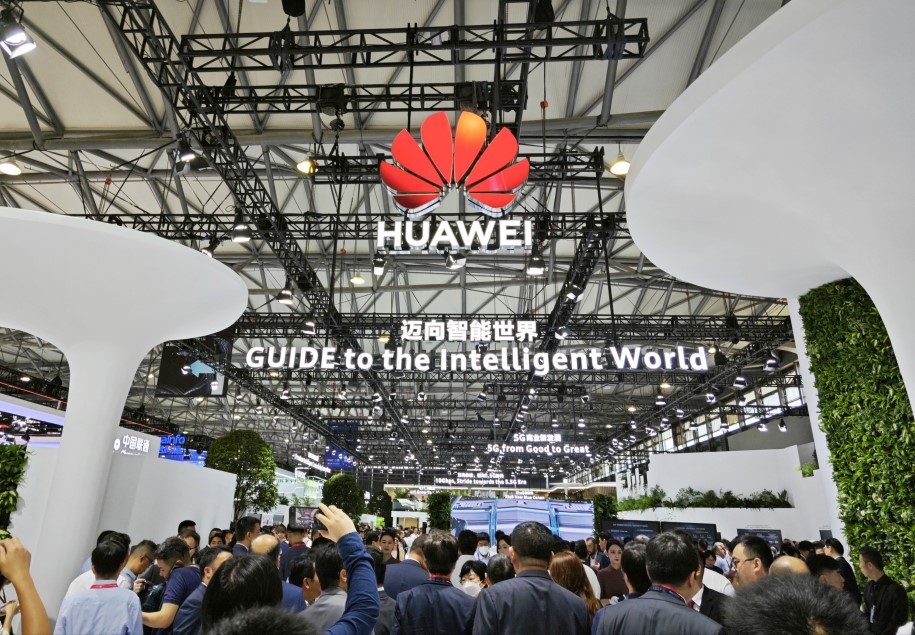
MWC Shanghai 2023 has officially kicked off. From 28-30 June, the largest and most influential gathering of the connectivity ecosystem in Asia brings together world-leading companies and trailblazers to share the latest thought leadership about the progression and future of connectivity.
Huawei has shown up in full force for MWC Shanghai 2023, with their activities all falling under their theme of ‘GUIDE to the Intelligent World’. Huawei will showcase its products and solutions at stands E10 and E50 in Hall N1 of the Shanghai New International Expo Centre (SNIEC). Together with global operators, industry professionals, and opinion leaders, topics such as speeding up 5G prosperity, striding towards the 5.5G era, and intelligent digital transformation will be unpacked during MWC Shanghai 2023. This year, the company’s activities include an experiential tour that takes audiences to multiple cities to learn about their technology and business, as well as the launch of its newest innovative products and solutions for 5GigaGreen, 5G intelligent core networks, Intelligent OptiX Networks, private line + X products, and other intelligent digital transformation solutions. At these activities, Huawei will also host numerous roundtables and dialogues with global operators, industry partners, and opinion leaders, to explore a variety of topics which include speeding up 5G prosperity, advancing intelligent digital transformation, and striding towards the 5.5G era to realise business, industry, and social value. The company says its goal is to create new value for customers and revitalize the digital economy through sustained innovation.MWC Shanghai 2023 – Embracing 5G transformation
Sabrina Meng, Huawei’s Rotating Chairwoman and CFO, gave a keynote titled “Embracing 5G transformation”. According to Meng, the digital infrastructure of the future intelligent world will be deeply integrated into every aspect of people’s lives, industry, and society. She further added that it won’t be based on advancements in individual technologies, but rather on incredibly massive, complex systems – the convergence of multiple elements. “It’s going to require systems-level thinking and design. When watching a chess game, you can see the big picture. But when you’re playing chess, you focus on the details,” she said. In addition, Meng highlighted that systematic capabilities to integrate technology and transform management are critical for the future success of 5G. “First, let’s talk about integrating different technologies. We can achieve greater synergy across cloud, networks, edge, and devices through systematic design and innovation across domains. When coupled with optimisation across software, hardware, chips, and algorithms, we can address the challenges associated with developing complex solutions for vastly different industrial scenarios.”In terms of management transformation, Meng explained that digital and intelligent transformation is not just about the technology itself, but more about the transforming approach to management.
“Going digital requires redefining the relationships between people, events, things, and theory, and adopting a more open, forward-looking management approach to address future challenges.”
