


The disappointing results of Aquarius Platinum’s December 2012 quarter have hardly come as a surprise considering the state of the global economy and illegal strike impact on production. Its single profitable entity, Kroondal (in which it owns 50%), remains the only star in the Aquarius stable.
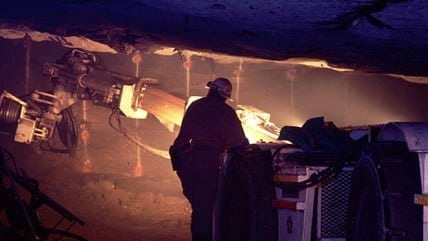
While attributable production from the company’s operating mines increased by 2% quarter-on-quarter to 78 987 oz (4E), it is the longer term company outlook that is on the examination table. Three of its operations are on care and maintenance, its percentage in Mimosa will decrease should the indigenisation programme conclude, and its acquisition of Booysendal South has yet to be finalised. “The period under review was yet another challenging quarter during which industrial relations in South Africa remained strained and metal prices remained low. The Aquarius management team persisted with its focus on restoring operational credibility at its Kroondal mine and I am pleased to report the migration to owner operator and the implementation of the revised hanging wall support regime, completed on time and within budget. The implementation of these initiatives, combined with a focussed and motivated work force at Kroondal contributed to the mine’s singificant production rate, which exceeded 100 000 oz for the first time sincethe December 2010 quarter, notably at reduced on mine unit costs, down 7%. Given the macro environment in the industry, this was a pleasing performance,” says Jean Nel, CEO Aquarius Platinum, who was appointed to the position in November 2012. Aquarius remains acutely aware that despite the improvements, the company continued to consume cash during the quarter. The price improvements and the weakened R/$ exchange rate in January 2013, combined with the fact that the once-off costs associated with the two aforementioned processes have been completed, is expected to substantially reduce cash consumption and enable to company to start producing cash at mine level. From a PGM supply and demand perspective there seems to be consensus that both platinum and palladium will move into primary supply deficit during 2013. Whilst encouraging the increase in recycling, the continued depressed demand from the auto producers and the substantial above ground inventories renders significant further price increases unlikely. The fact remains that despite the significant operational improvements, cash generation at current spot prices remains constrained. It is against this backdrop that management continues to focus on cash preservation and operational stability and improvements.While the company’s Marikana, Everest and Chrome Tailings Retreatment Plant operations remain under care and maintenance, largely as the result of weak PGM prices, Kroondal can largely be considered the company’s saving grace.1. 72 Mt of production (run of mine), up from 1.4 Mt in the previous quarter, saw the mine deliver over 100 000 oz, while reducing its cash costs by 11%.
“The migration to owner operator has been positively received by organised labour, employees and suppliers and is one of the main reasons contributing to the increased morale amongst the workforce and contributed to the completion of a strike free quarter,” says Nel. The company continues to develop the K6 shaft at Kroondal which remains on budget and is ahead of time. The Zimbabwe-based Mimosa delivered a disappointing production performance, which decreased by 5% to 600 066 t, in line with forecast. “The Mimosa mine continues to operate well, despite growing cost pressures which led to above expectation increases in cost. Discussions on indigenisation were concluded during the month and this culminated in the signing of a term sheet on the 14 December 2012. The term sheet sets out the key details of the indigenisation plan and paves way for the drafting of detailed agreements that will facilitate the implementation of the plan. It is envisaged that all agreements will be finalised by the end of March 2013.” Its 91.7% owned tailings operation, Platinum Mile, wassignificantly impacted by strikes at Anglo American Platinum (Amplats) during the months of October and November. The operation lost 13 production days in September and virtually the whole of October and November 2012 as a result. These strikes continued into early December 2012 when production commenced as per normal. Encouragingly, a positive cash margin was achieved despite these trying circumstances. The recently announced restructure at Amplats is not expected to materially impact the operations of Platinum Mile as it continues to treat only tails from the Merensky concentrator whilst it is expected that Amplats will reduce UG2 production as part of its restructure.Material processed decreased 66% to 389 Mt.
