


Reports that Eskom spent R10 billion to supplement SA’s energy supply last year has raised new questions about the utility’s future – and who foots the bill.
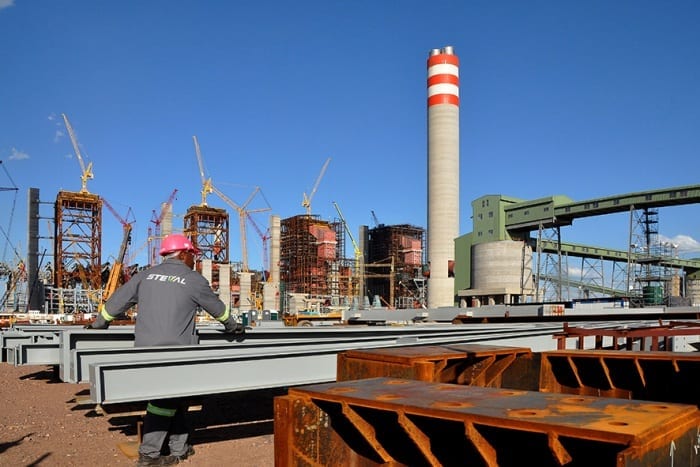
A Cape Times report reveals that the actual amount spent on diesel in 2013 was R8 billion more than Eskom had budgeted for, driven largely by extremely tight reserves and extensive maintenance work. Eskom had to run so-called “peaker-plants” – open cycle gas turbines usually used to meet peak demand in the mornings and evenings – for much longer than usual last year. Peaker plants were used on average 17% of the time in 2013, Eskom’s Andrew Etzinger said in the report. He added that Eskom was in discussions with national energy regulator Nersa and government over who would pay for the additional R8 billion spent. At present it is not clear whether Treasury or South African consumers will foot the bill. This comes as citizens already face annual average increases of 8% for the next five years, with mining companies looking at increases of 9.6%. Ian Curry, Managing Director of Basil Read Energy, says the utility didn’t have much choice in using the diesel-powered generators, as the only alternative was load shedding. “The impact this has on the economy, especially in terms of the protracted effects and decline in business confidence, is probably worse.” Curry adds that while R10 billion is a massive sum to spend on additional capacity, the short-term options available to Eskom are limited. “Everyone talks about the Independent Power Producers (IPP), but no IPP can put down that amount of capacity that quickly”. Curry also believes that the cost will ultimately be borne by the consumer, essentially resulting in a bailout. Conflicting drivers Delays in getting new power stations Medupi and Kusile online have added to Eskom’s woes, with 4800 MW Medupi nearly a year behind schedule.But Curry believes it is the delay in getting the Independent System and Market Operator (ISMO) Bill through Parliament that has been at the heart of supply problems in the country.
The Bill would see the removal of Eskom as the national electricity system operator in favour of an independent entity, inviting greater competition in the generation and transmission of electricity in SA. The Bill is set to be revisited by Parliament after the national elections on 7 May. Another hurdle, according to Curry, is the fact that Eskom’s overhead expenditure (including staff count) compared to its operational performance is particularly poor compared to other global utilities. “It’s going to be frustrating for any CEO taking over from Brian Dames because you need to run Eskom as a commercial company, but you can’t lay people off. You’re trying to run a commercial business on the basis that it’s a government department.” Eskom employs more than 44 000 workers directly, with this figure tripling if indirect jobs through Eskom’s suppliers are included. In a time when job creation is a national imperative, one of the biggest state employers cannot be seen offloading jobs, says Curry. Silver lining? Going forward, he believes the ISMO Bill, if passed, will help level the playing field, with the onus on the Department of Energy to then put out energy generation requirements to IPPs. A glimmer of hope could come from the country’s renewable energy programme, which the government deserves credit for, says Curry. “Every month you see a new renewable power plant coming online and government has really been sticking to its annual awards of renewable capacity.” He adds that the locations of the renewable plants means they not only add generation capacity, but mitigate transmission losses, meaning power can be used elsewhere. In the medium-term, additional supply coming from Mozambique’s newly discovered gas fields could provide a stopgap, as well as the increased practice of net metering among commercial organisations, says Curry.
