


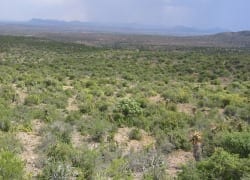
During the election, Agang SA took a position against fracking in the Karoo. Agang SA specifically referenced the Treasure the Karoo Action Group because we believe it deserves recognition.
Much of the fracking debate is framed by the presumption that the 2012 Econometrix report on fracking is definitive and that any opposition to fracking will lose the opportunity to create hundreds of thousands of jobs.
Econometrix report is deficient
We find the Econometrix report deficient in two key respects. First, the report relies on a Keynesian multiplier to estimate total job creation. A Keynesian multiplier usually applies to estimate the effect of stimulus during an economic downturn when there is spare capacity in the economy. That South Africa lacks such spare capacity is evident in the more than 800 000 vacancies for skilled jobs. The expectation that applying money to the economy will result in a given number of jobs, without addressing fundamental stumbling blocks to job creation, is the kind of tooth-fairy economics that gave us the arms deal.
Dismisses pollution concerns
Second, the Econometrix report dismisses concern about pollution on the basis that there will be so much money around that this can be fixed. Fossil-fuel extraction in underdeveloped economies, particularly those with a high level of corruption, has a very poor track record of redressing pollution. In Nigeria, for example, oil-rich states have regressed economically because of pollution.
Still in Nigeria, a tiny fraction of the population has benefited from oil extraction that runs to trillions of rand. Far from reducing poverty, oil income has increased inequality, particularly in Nigeria’s oil-rich states. South Africa is already the most unequal society on the planet by some scores; extractive industries are not equalisers.
Economic costs
More broadly, the report fails to address negative externalities — economic costs incurred by those who are not parties to the transaction. Aside from pollution at site, these costs include loss of groundwater, damage to rural roads and the biggest negative externality of all, climate change. Natural gas pollutes less than coal but its main constituent, methane, is a very potent greenhouse gas, and levels of leakage (fugitive emissions) from natural gas production are a highly contested subject.
Damage to rural roads is an aspect not much canvassed in public debate. Either local water supplies are going to be used for fracking or water must be trucked in and the quantities required add up to hundreds of tanker trucks for each well. Experience in other dry regions where fracking has happened do not bode well: whatever the proponents say, using up scarce groundwater is their best option, and they will do it if there isn’t strong regulation to keep this in check.
Climate change
Climate change is too big a subject to debate here; the mainstream science is sufficiently robust to take action, and the contrarian movement has not established an adequate case.
Agang’s position on fracking is based on the expectation that exploration will put dollar signs in politicians’ eyes and create unstoppable momentum, no matter what the risks. Our focus today should be on skills development and opening opportunity for small business development, the real generators of jobs. If our concern can be addressed, the gas will still be in the ground — and worth more, as fossil fuels become more valuable as competing resources deplete.
Should climate change turn out to be a hoax, which is extremely unlikely but some live in perpetual hope, exploiting gas when the economy is more mature and able to absorb that kind of boost without large-scale corruption and with proper control and costing of negative externalities, we can take another look at fracking.
Gas extraction from the Karoo
In the short term, the most likely effect of gas extraction from the Karoo will be further enrichment of a small elite, with most of the profits ending up offshore. And once the gas is gone, not only will there be no gas-related jobs, but the legacy of extraction with inadequate controls will be a collapse of the only kind of job that is sustainable on a large scale in the Karoo, farming.
This is an edited version of a letter by Philip Machanick, Agang SA Eastern Cape spokesman and policy convener, published on BDlive.

