


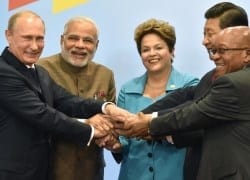
Leaders of the five BRICS nations have agreed on a structure for the $50 billion emerging nations development bank that is set to rival the International Monetary Fund (IMF).
Brazil, Russia, India, China and South Africa (BRICS) were all granted posts in the new bank, following the BRICS Summit in Brazil this week. The bank aimed at funding infrastructure projects in developing nations will also have India presiding over its operations for the first five years, with Shanghai acting as the institutional headquarters.$100bn currency reserve
Leaders of the five nations also formalised the creation of a $100 billion currency exchange reserve, which member states can access in the event of a balance of payment crisis, stated the BRICS leaders at a meeting in Fortaleza, Brazil. The new bank reflects the growing influence of the BRICS, which account for almost half the world’s population and about one-fifth of global economic output. The bank will begin with a subscribed capital of $50 billion divided equally between its five founders, with an initial total of $10 billion in cash put in over seven years and $40 billion in guarantees.“Emerging markets, especially BRICS, continue to be the driving force of the global economy,” Brazilian President, Dilma Rousseff, said after a signing ceremony.
“It is a sign of the times, which demand reform of the IMF,” Rousseff told reporters after the summit.
