


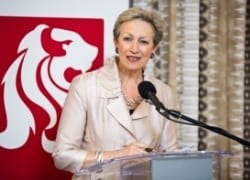
An integrated energy planning (IEP) panel discussion into future energy development in South Africa was hosted by national energy lobbying and advocacy group Project 90 by 2030 on Friday at Wits University in Johannesburg.
British High Commissioner to South Africa, Judith Macgregor, delivered the opening presentation at the event that also saw the launch of a publication titled ‘The Tyranny of Realism: Integrated Energy Planning (IEP) in South Africa in 2014’. The report was published by Project 90 by 2030, with support from the Foreign & Commonwealth office of the British High Commission.Future energy policy
Discussions included the Department of Energy’s integrated planning process and whether it offers an effective process for society to engage in the drafting of future energy policy. “We are passionate about working with South African government in reducing carbon reduction…and working towards forming an international agreement,” said the British High Commissioner. “We have taken a view that we need to be aspirational,” said Macgregor.IEP publication
The Department of Energy, in July 2013, advised that the final Integrated Energy Plan (IEP) for South Africa would be published in March 2015. The announcement followed the launch of a public consultation phase for the formulation of the country IEP.Reducing carbon emissions
In 2010 investments in renewable energy supply reached $211 billion and more than half of these investments were in developing countries, according to the United National Environmental Programme (UNEP). The UK has achieved a 30% reduction in carbon reduction since its making a commitment in 2008 to reduce carbon emissions by 80% by 2050. “In the UK, we want to maintain nuclear contribution to the energy mix,” said Macgregor.Nuclear energy has come back into the debate ‘more forcefully’ now than in the past, Macgregor added.
“So, how do we balance aspiration with realism?” she challenged. “By having transparency of process we are in a better place.”
