


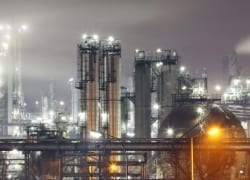
Rising energy costs and its negative impact on miners operating costs is one of the issues to be explored in ‘Powering African Industry Conference’ to be held from 15 to 19 September at Electra Mining Africa 2014.
Chairperson of the Association of Mining and Industry Energy Optimisation, Charles Ntsele, says that the South African industry is accustomed to cheap electrical energy, and its ‘optimal usage was therefore never a norm’.Alternative energy sources
The conference seeks to provide insight into improving power reliability for African industry and alternative energy sources, carbon tax, micro-grids and energy management standards are key topical areas up for discussion at the conference. Ntsele says that businesses must develop a binding energy management plan which should be integrated into performance contracts of those responsible for its execution. “Moreover, when the potential benefits that accrue from such an initiative are interpreted into the longevity of the business for the entire workforce, then internalisation by all stakeholders becomes feasible,” he explains.Critical reserve margins
Ntsele notes that in the South African energy context, one of the major challenges facing intensive energy users is critical electricity reserve margins. “They are the first to be requested to cut back on usage. This cannot be good for productivity and planning,” he says.Energy management software
Ntsele says managers, at the very least, need to understand and know the distribution of energy consumption within every aspect of their operations, adding that this should be coupled with knowledge of best practices and tools, such as enterprise energy management software. “In the mining sector some companies are not only driven by financial implications but also realise that the wellbeing of the environment is intrinsic to their sustainability and they therefore continue to maintain their commitment to the efficient use of energy,” says Ntsele.

