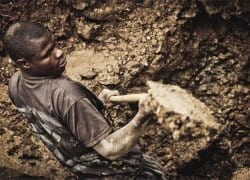
In many African countries, a new mine starting up will often find artisanal miners in their area, and this needs to be handled professionally, whether the practice is legal or not, says mine development consultant Jules Mulya.
Mulya works with mining companies and other stakeholders in the Democratic Republic of Congo to ensure the long-term sustainability of mining operations.
He says it is vital for every mine to be sensitive to its social and economic environment.
Legal grey area
“Working on remote sites under difficult conditions and hidden from the public eye, there are many thousands of artisanal miners who face exploitation,” he says.
A
s a practitioner in this complex field, Mulya is confronted with multiple ‘grey areas’ in which a simple, legal approach is not sufficient to deal with the competing interests at play.
Developing better communities
Mulya believes in the power of mining to change lives for the better by bringing development to disadvantaged regions.
“When it is done correctly, mining brings infrastructure, such as energy generation, roads and social amenities, which make life better for communities and also provide business opportunities for local entrepreneurs,” he says.
“So it is important that mining projects align their vision with local and national government priorities to ensure that they have the best impact possible.”
Engaging communities
Mines now see the need for early and ongoing engagement with local communities, to make sure that decisions made are in the broader social and economic interest, says Mulya.
“What is new is how companies go about investing in communities,” he said. “Even in the DRC, a major paradigm shift has taken place; the notions of sustainability, shared value and engagement based on mutual respect have come to the fore.”
Local players
While investors expect a return on their mineral investment that is in line with their risk, they also must recognise the roles of local players in the success of the venture.
Mulya says he has seen the change in communities’ vision, too, as they start to look to the longer-term future and not just immediate gains from the fruits of mining.
“Communities no longer only aspire to improved livelihoods for now,” explains Mulya. “They have started to take a long term view, thinking of their own future and future generations. They know that the mining resource in their land will one day be depleted so they want to be ready for it; this also helps companies become more fully aware of their post-mining obligations.”
Course on community relations
Mulya recently completed a course on community development and stakeholder relations presented by Synergy Global and the Centre for Sustainability in Mining and Industry at Wits University.
There are currently four Synergy and sustainability courses at Wits – each running for five days – all aimed at building the capacity of community relations practitioners.
For more information about the Community Relations Practice in the Extractive Industry programme visit www.synergy-global.net/r/training.php. or www.wits.ac.za/csmi.