Aureus Mining’s gold project in Liberia is facing delays in the guided start-up projection of initial gold production in Q1 2015 and steady state output by the end of the first half of the year.

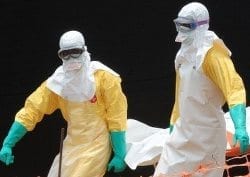
Aureus CEO David Reading said that the while there had been no Ebola cases reported at the company’s New Liberty gold project, the Ebola outbreak in West Africa has affected equipment deliveries to the mine.

New Liberty is purportedly one of the Aureus’ notable success stories in West Africa, being the junior explorer’s most advance gold mine under development in the region – where construction is two-thirds complete.

Protection protocols

Aureus implemented strict Ebola protection protocols with enhanced security and more restricted access to operations, daily temperature screenings and travel restrictions to mitigate the impact of the Ebola outbreak.

New Liberty is projected to produce 120 000 oz/year gold for the first six years of a current eight-year mine life.

Meanwhile, London Mining, the first significant mining company victim of West Africa’s Ebola epidemic is on life support and like most of the human victims has little chance of survival.

Miner in administration

The company operates the Marampa iron ore mine in Ebola-stricken Sierra Leone has had to call in the administrators – a task being handled by Price Waterhouse Coopers (PwC).

London Mining’s chief executive Graeme Hossie said the Marampa mine is an important part of Sierra Leone’s economy and ongoing development.

He said, “The Marampa mine retains excellent fundamentals and it is our sincere wish for it to find the appropriate financial support to continue operating over the longer term.

Debt-ridden company

The chances of finding a buyer who will actually cough up any significant money for the debt-ridden corporate entity are seen as virtually non-existent, according to Mineweb.

While it is not the Ebola epidemic itself that has been the main factor in the company’s almost certain demise, but the dramatic fall in iron ore prices, Ebola has been, in effect, the final straw adding to costs and restricting potential investment interest from third parties.

The company’s share price on London’s AIM market fell from comfortably over £4 in April 2011, down to around 4 pence and now trading is suspended.

Additional Reading?

Request Free Copy