


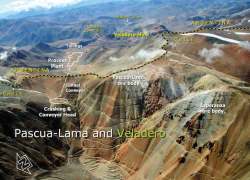
Barrick Gold is confident its Pascua Lama gold and silver project in South America that has been stalled for over a year will get built, but added it ‘does not have margin for error’.
The Canadian miner has been allowed by a Chilean court to resume construction at Pascua Lama after a year of the project being stalled owing to a range of issues, including permitting problems.Impairment charges
Barrick has invested heavily into the fraught Pascua-Lama project already spending $5 billion on the project, which is one of the world’s largest gold and silver resources. The company recorded $5.1 billion in impairment charges on the Pascua-Lama project in the second quarter of 2013 as a result of falling gold prices. However, upon commencement of commercial production, originally expected in the second half of 2014, the mine will significantly boost Barrick’s gold output at extremely low operating costs once production begins.Moving forward
Speaking to Chilean financial newspaper Diario Financiero (in Spanish), project executive Edmundo Flores said the gold giant is still looking for ways to take the project forward, despite the fact it may take years to get new permits and build the water system Chile’s top court indicated as main condition to let the miner resume construction.The company has made significant changes. I think there’s definitely a way to move forward. It’s small, but it exists,” Flores was quoted as saying.
“We have to be careful, we can’t make mistakes… there is no room for error this time,” he added.
