Shale gas exploration in South Africa, believed to have the eight largest reserve in the world, has been met with criticism, yet remains in the national debate.
South Africa is the first country to reverse a moratorium on hydraulic fracturing.
Coal dependence
Hydraulic Fracturing or ‘fracking’ has become an important topic considering South Africa’s country reliance on fossil fuels, with coal accounting for more than 70% of primary energy production, more than 90% of electricity generation and a third of liquid fuels.
High levels of coal production, an inefficient electricity infrastructure and the fact that a fifth of South Africa’s coal goes to the only commercial coal-to-liquid plant in the world make South Africa the sixth most carbon intense economy in the world and the 18th largest energy producer, while ranking only 27th in terms of Gross Domestic Product (GDP).
Carbon restrictions
This dependence on coal production not only fosters an unsustainable energy sector – both economically and environmentally – but also means that South Africa could face globally imposed carbon emission restrictions in the future.
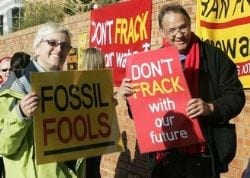
However, potential shale gas exploration in South Africa’s Karoo region has been met with public outcry amid concerns that fracking with contaminate the already fragile water resource in the region.
Using freshwater in the Karoo for fracking could increase the vulnerability of the rural population’s access to water and increase the region’s susceptibility to drought, according to a research paper by Centre of International Futures compiled by Jonathan D Moyer, Jessica Rettig and Steve Hedden.
To read the full paper by the Centre of International Futures on Fracking for Shale Gas in South Africa: Blessing or Curse?
click here.