


The long awaited Marikana Report was released by President Jacob Zuma last night.
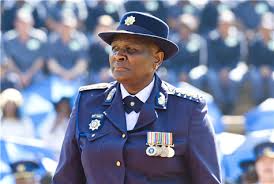
The big take-away of the report of the Farlam Commission was that an inquiry be held into the fitness to hold office of National Police Commissioner, Riah Phiyega, and former North West provincial commissioner, Lieutenant-General Zukiswa Mbombo. Riah Phiyega discrepancyThe report noted that following the 2012 shooting, an initial police report was sent to the President, and this report made clear that 16 miners had been shot on the hill in Marikana where police surrounded them, and 15 more as police pursued miners into a nearby field. Later, more succumbed to gunshot wounds suffered at both scenes, raising the death toll. A nearly identical statement was read out by Phiyega at a media briefing soon after, but with one “very material difference” – whereas Zuma was informed that police also opened fire in the field, Phiyega’s statement “does not disclose this”. “It creates the impression that there was only one shooting incident, which culminated in the police having to defend themselves with maximum force against a storming group of strikers who fired shots and wielded dangerous weapons,” Zuma said. The commission said this deviation “resulted in a deliberate misleading of the public” and noted that when question Phiyega batted to explain the discrepancy, but claimed authorship of what she had told the press. Zukiswa Mbombo
The report made equally damning findings against North West provincial police commissioner Zukiswa Mbombo, also recommending a probe into her fitness for the job, and called on prosecuting authorities in that province to ponder the possibility of criminal charges against police involved in the operation.
Zuma noted that police had jumped the gun and it was likely that waiting one more day, instead of storming the hill near Lonmin’s Marikana mine on the 16th, could have prevented deaths.
“The commission has found that it would have been impossible to disarm and disperse the strikers without significant bloodshed, on the afternoon of the 16th of August.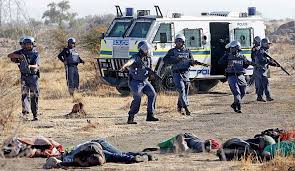
The SAPS on the 16th of August
The Commission found that the SAPS’s actions during the strike and found that the SAPS was indeed to blame for incorrect tactical plans, and in particular, on the afternoon of 16 August, it would have been impossible for the SAPS to disarm and disperse the strikers without bloodshed. According to the Commission, the SAPS should have waited for until the following day. Even more than the tactical plans going wrong – was the concern raised over the hour delay for medical assistance reaching injured workers, highlighting that one striker could quite possibly have survived had he been treated timeously. Click here for the full report.

