


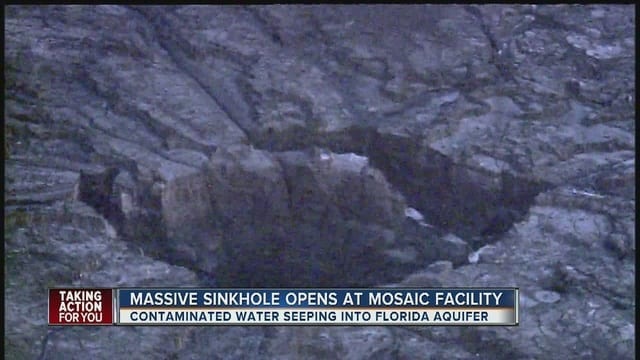
 A sinkhole 14 meters wide has opened up in a pile of mining waste at Mosaic’s New Wales site, swallowing about 814 million litres of radioactive wastewater.
The world’s largest producer of phosphate fertiliser noted the particular hole is enough to fill about 326 Olympic-sized swimming pools.
The company said it discovered the loss of water on 27 August. The pool of water that drained away had sat atop a stack of phosphogypsum; a type of waste from processing phosphate rock, which, according to the U.S. Environmental Protection Agency, emits a radioactive gas and contains uranium and radium.
The company said a preliminary estimate for the cost of repairing the sinkhole is as much as $50 million.
While Mosaic first noticed the problem in late August, it didn’t make a public announcement until 15 September.
“Mosaic should have really disclosed this when they found out about it,” said Chris Damas, analyst, BCMI Research. He advised his clients to sell Mosaic shares after news of the sinkhole broke. “Investors are really going to feel less trusting that Mosaic is being forthcoming with their environmental liabilities.”
Walter Precourt, Senior Vice President for phosphates said Mosaic regrets and apologises “for not providing information sooner.” The apology has not placated anyone and three local residents are now suing the company, alleging improper storage of chemical waste.
The spill could mean increased hurdles for Mosaic’s expansion plans in Florida, according to Jonas Oxgaard, a New York-based analyst at Sanford C. Bernstein & Co.

