


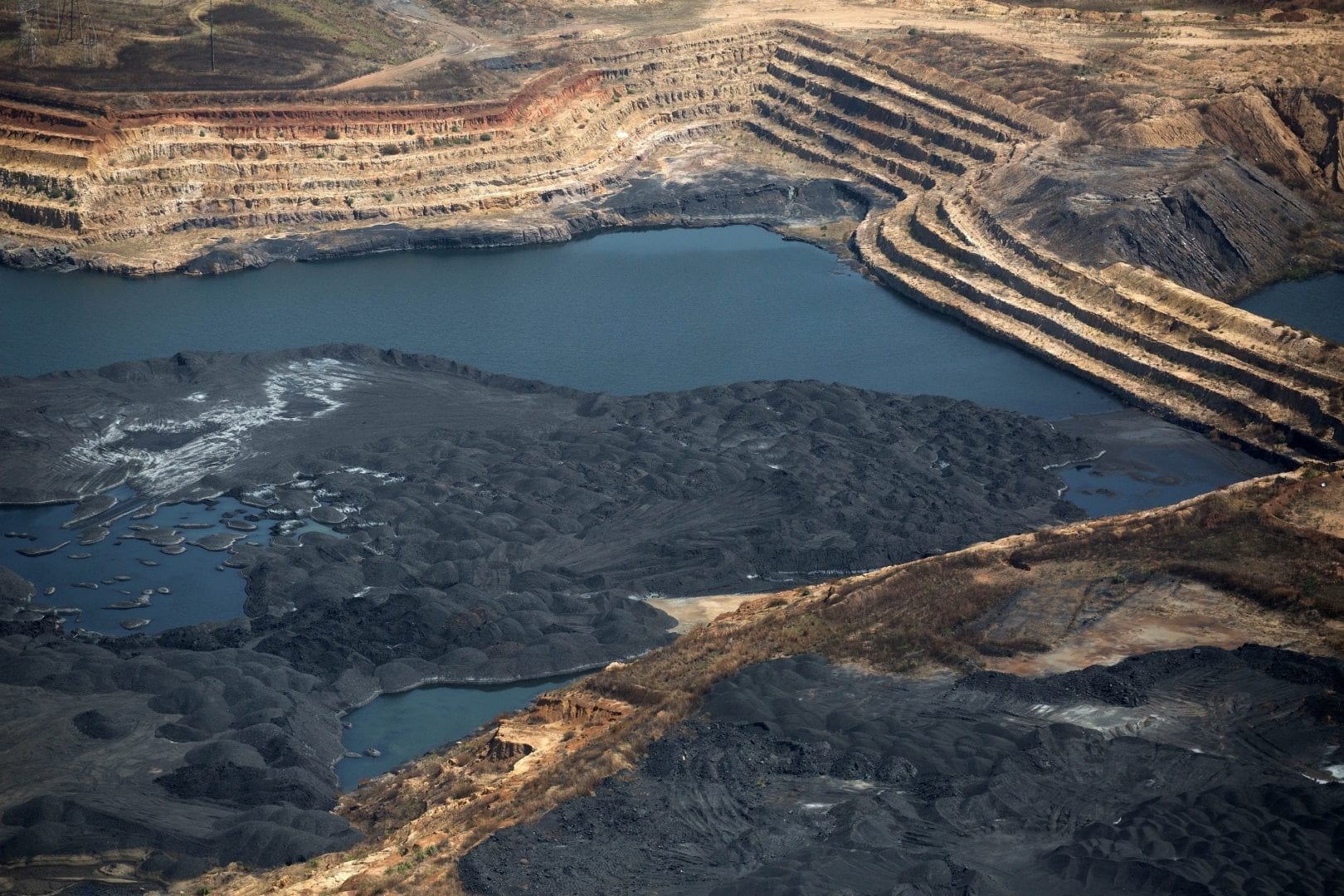
Coal mining pit in Mpumalanga. Picture: James Oatway
Four mines have been named in The Centre for Environmental Rights’ (CER) 2016 version of Full Disclosure: The Truth about Corporate Environmental Compliance in South Africa, as failing to adequately disclose findings of serious environmental violations in their annual reports.
CER has added ten new listed mining and exploration companies with significant environmental impacts to its existing 2015 assessment, and highlighted Glencore, South32, Kumba Iron Ore and Coal of Africa Limited as being in violation of environmental laws. A company’s track record of compliance with environmental laws is one of the most important indicators of the environmental risk posed by its operations. Currently, each company is free to report on its compliance in any way it sees fit. This makes it extremely difficult for stakeholders to assess the environmental risks posed by a company’s operations, and to compare environmental compliance. As a result, these issues are often ignored. Tracey Davies, head of Corporate Accountability & Transparency Programme, CER, said, “Full Disclosure 2016 provides more evidence that some listed South African companies are exposing investors to potentially devastating risk by committing serious environmental violations and failing to disclose this adequately to shareholders. It also demonstrates that the lack of standard reporting requirements for environmental compliance is compromising sustainable and responsible investment.”Included in the report is updated information on the twenty companies reported on last year.
A third of the companies assessed in Full Disclosure 2015 have improved reporting and disclosure on environmental compliance in their annual reports inlcluding AECI, DRDGOLD, Impala Platinum, PPC, Sappi and Sasol. CER proposals on environmental compliance reporting have been adopted in the King IV Report on Corporate Governance. In South Africa, environmental regulators do not yet have the power to impose fines on companies for breaking environmental laws, regardless of the extent of the damage. For this reason, companies can, and often do, hide serious risks emanating from environmental violations. Davies said, “The CER welcomes the inclusion of a new requirement in the King IV Report that companies disclose details of environmental compliance inspections – and findings of non-compliance – by regulators. We proposed this requirement in the comments that we submitted on the draft King IV Report earlier this year. This is a significant step towards improving environmental compliance reporting, and will provide stakeholders with much more useful information with which to assess and compare environmental risks. In an effort to further bridge the gap between companies and investors, we will also be releasing guidelines for environmental reporting in early 2017.”
