


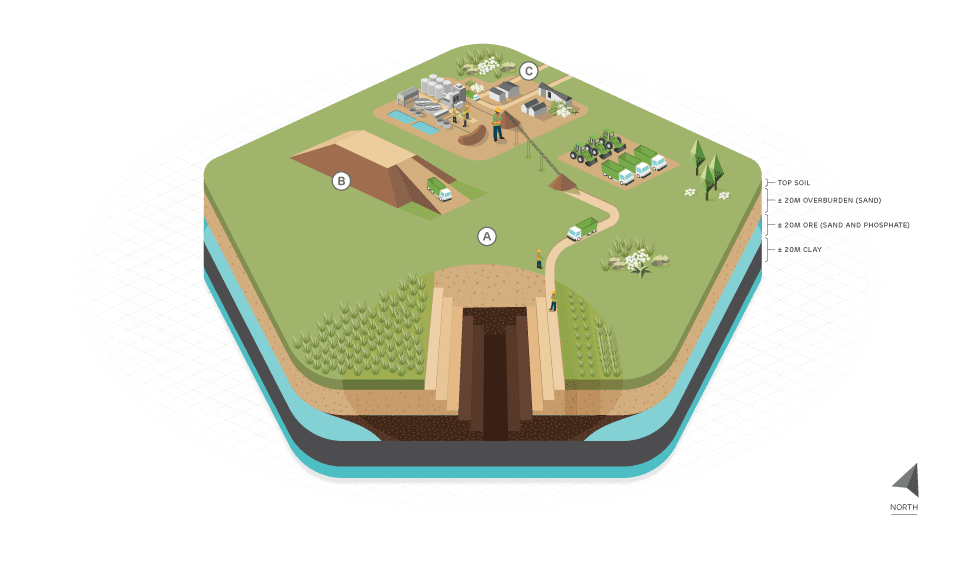
 The Saldanha Bay Municipality plans to accept all water that Kropz Elandsfontein (Kropz) will be removing from a 5 – 10 million year old Elandsfontein aquifer, on which it has established its controversial opencast phosphate mine.
Kropz has been attempting to artificially recharge the aquifer – at an injection rate never before successfully achieved in South Africa – with the water generated as a result of the dewatering.
Walter Anderson, Senior Associate at Cullinans & Associates, the law firm representing the WCEPA in its fight against Kropz, said, “It is notable and concerning that the Saldanha Bay Municipality’s resolution focuses almost exclusively on how the Western Cape droughts have affected industry, when one would expect drinking water and sustainable use of water resources to be the first priority. “When an emergency situation like this presents itself we have to question whether water intensive industries like phosphate mining and processing are appropriate in perpetually water stressed environments such as the West Coast.” Anderson explained that Kropz acted recklessly from the very beginning by establishing the mine without the necessary permits and contingencies. He said since the water issues were only going to get worse in the province, and that the municipality should not have been complicit in allowing the mine to be established because it was not a sustainable option to go with from a water management perspective. He added that the mine was not going to be a significant job creator, especially if it decided to close its doors every time there was a water shortage or dip in phosphate prices.
