TOMRA’s advanced sensor-based sorting technologies offer mining operations the dual benefits of energy efficiency and the ability to recover valuable ore even from sub-economic deposits or dumps. This has become increasingly relevant as the mining industry – a very large consumer of energy – is shifting towards a Green Mining approach to reduce its environmental footprint in the face of climate change, while running profitable operations.
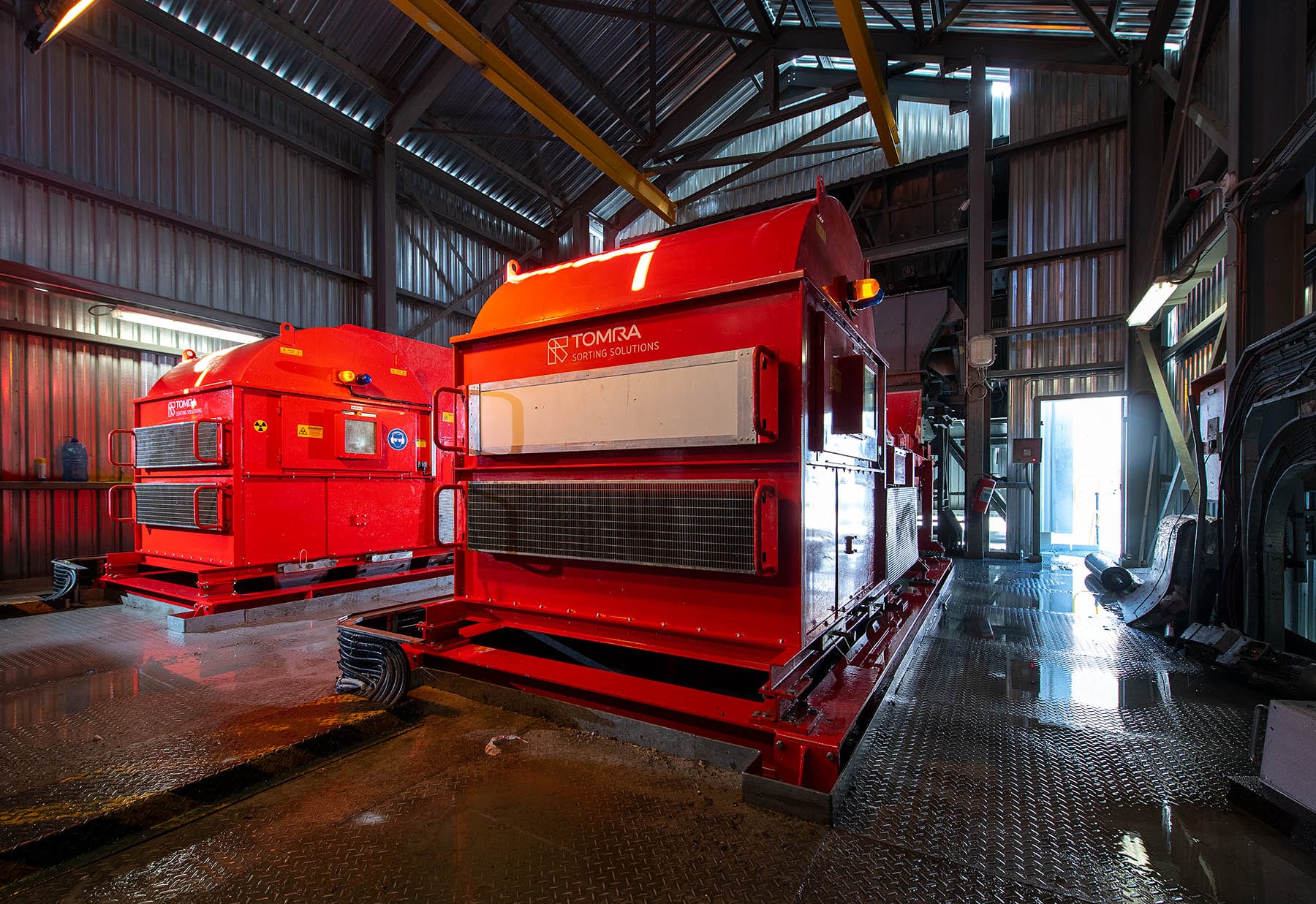
Tord Svensson, TOMRA’s Head of Sorting Mining, explains: “For a mining company to become more sustainable and profitable, it requires a shift in focus that places more value on potentially limited commodities like water and ore. To achieve an environmentally-focused and efficiency-oriented production process – which is integral to Green Mining – it is necessary to implement solutions right from the beginning of the process. This is where ore sorting equipment comes in: using these technologies in the early stages of mining reduces waste material and shrinks the carbon footprint, while increasing profitability.” TOMRA is a leading pioneer of sensor-based sorting technologies, which are able to give a significant contribution to a more environmentally sustainable approach in mining. It offers smart technologies for sorting and separating a variety of valuable substances. Its solutions range from industrial mineral processes to sorting gemstones, ferrous and non-ferrous metals, coal and other fuels and slag metal. The sensor-based sorting technology by TOMRA not only significantly reduces the amount of energy and water required compared to more traditional methods such as grinding and DMS (Dense Media Separation), but also maximizes the efficiency and quality recovery of valuable ores. X-Ray Transmission (XRT), one of TOMRA’s leading solutions, separates dry material of various ore and minerals based on their atomic density, irrespective of surface properties and thickness. This means that it is not necessary to crush or grind every rock into smaller particles, which results in massive savings of energy, water, and their related costs. Considering that grinding is the most energy-intensive part of the production cycle, as an estimated 50-75% of the energy used in mining is for the liberation and comminution of ore and minerals1, this technology can have a significant impact on the sustainability and profitability of a mining operation.Pre-concentration techniques like sensor-based sorting have been proven to reduce energy consumption by about half, resulting in a considerable reduction of the CO2 footprint and providing a highly cost-effective solution.