


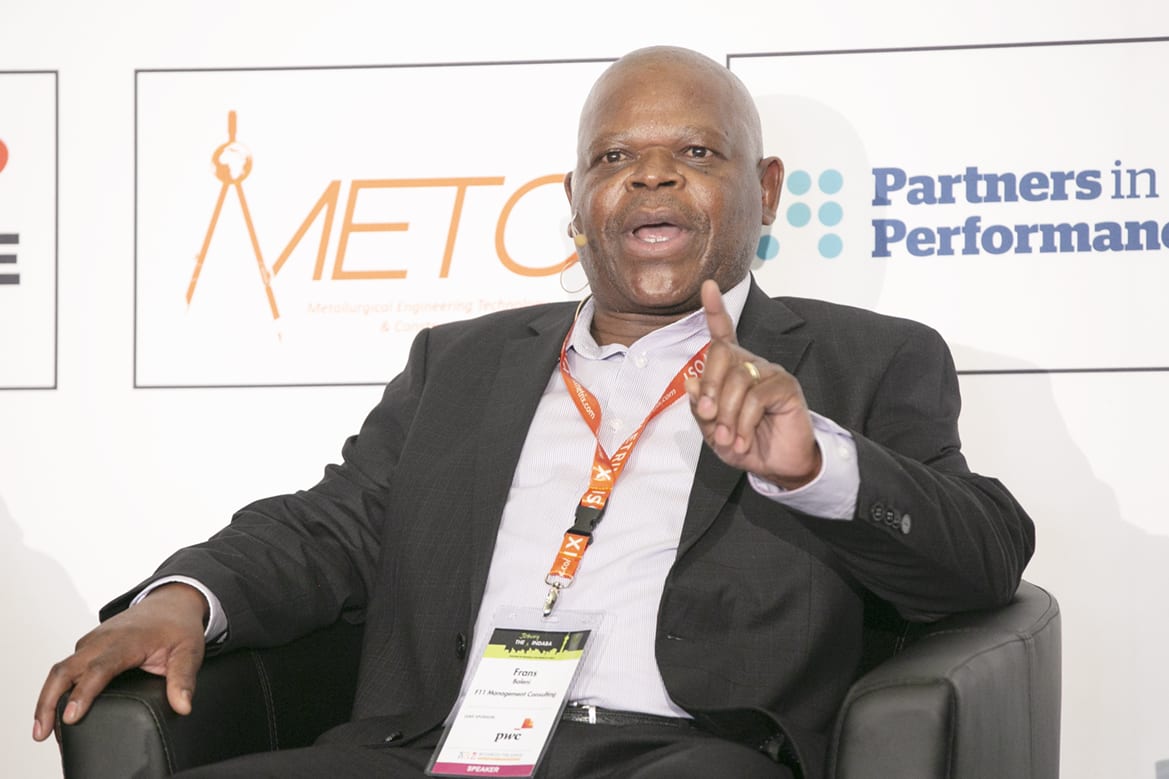
Now is the time to let go of narrow interests and start working together collectively to save South Africa’s economy, Frans Baleni, director of F11 Consulting, and former national secretary of the National Union of Mineworkers (NUM), implored delegates at the 2019 Joburg Indaba.
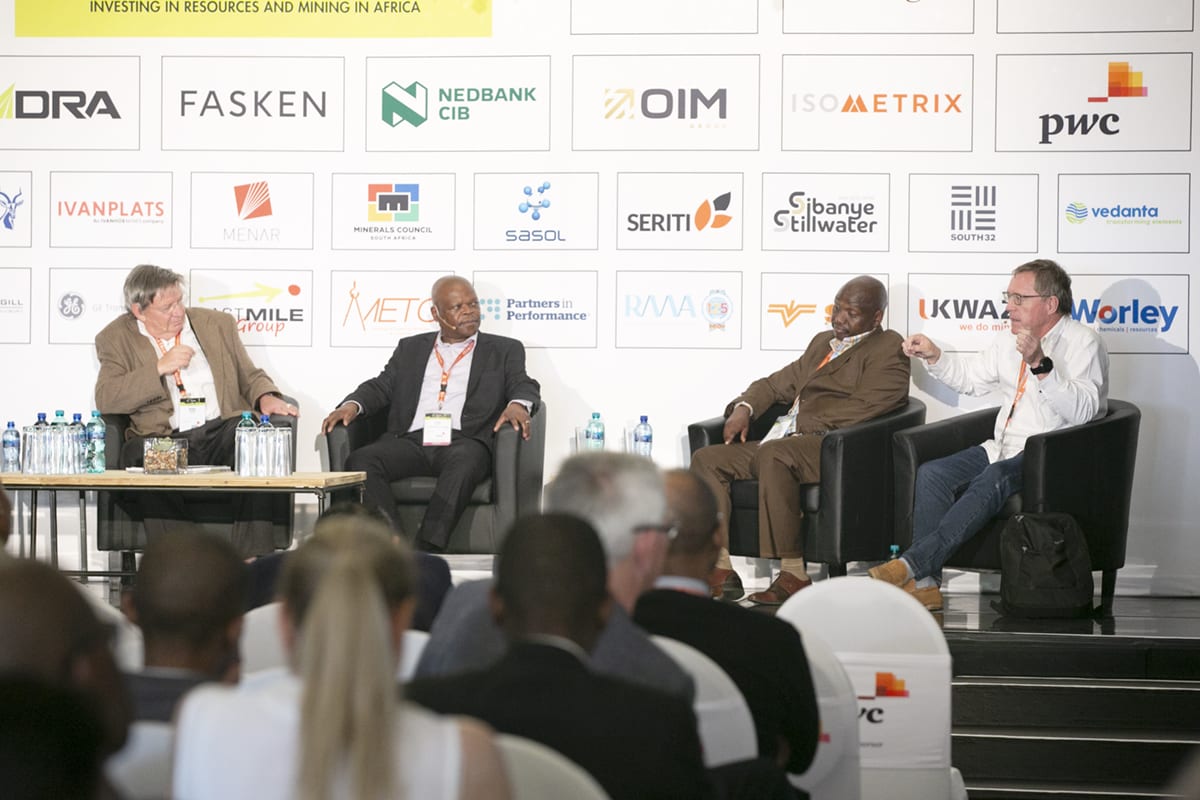
Bobby Godsell with Frans Baleni, William Mabapa and Dawie Roodt.
He referred to Ramophosa’s recent appointment of 18 economists to the new Presidential Economic Advisory Council: “We need a president who says follow me! And not one who keeps asking others, ‘what do we do?’”
Baleni added that it was time for a ‘social contract’ amongst all stakeholders, including labour and employers. “For the sake of our country, we need to deal with specific issues. Especially with a country that has so many policies, and so many conferences to discuss policies, we urgently need to shift towards the implementation of a focused agenda of restructuring our country, particularly with our state-owned enterprises, and particularly for Eskom.” In terms of power utility Eskom, Roodt boldly made a statement: “We need to fire at least 20 000 people from Eskom. If we don’t do that, we won’t fix Eskom.”
