A critical aspect of the removal of industrial, chemical, and mining plants is dealing with any hazardous materials present on-site in a responsible and cost-effective manner, while complying with all applicable regulations, explains Jet Demolition Safety Manager Marthinus Botha.
Jet Demolition has carried out
such projects under extremely demanding conditions, including radioactive
decontamination according to IAEA (International Atomic Energy Agency) and NNR
(National Nuclear Regulator) standards.
“We also regularly conduct
decontamination and safe disposal of a broad spectrum of hazardous industrial
materials and chemical substances,” Botha
comments.
He adds that the demolition
specialist is well-equipped and experienced to deliver
environmentally-responsible, but also practical, projects for large industrial
and mining sites. It has previously demolished an extensive range of
industrial, chemical, and mining plants, where a wide spectrum of toxic or
hazardous materials were decontaminated, treated, neutralised, or disposed of.
These include arsenic, uranium isotopes, methane, hydrochloric, hydrofluoric and sulphuric acid, cyanide, benzene, chlorine, hydrogen peroxide, oxygenated solvents, vanadium pentoxide, limestone ammonium nitrate, lead, manganese, mercury, and sodium hydrosulphide.
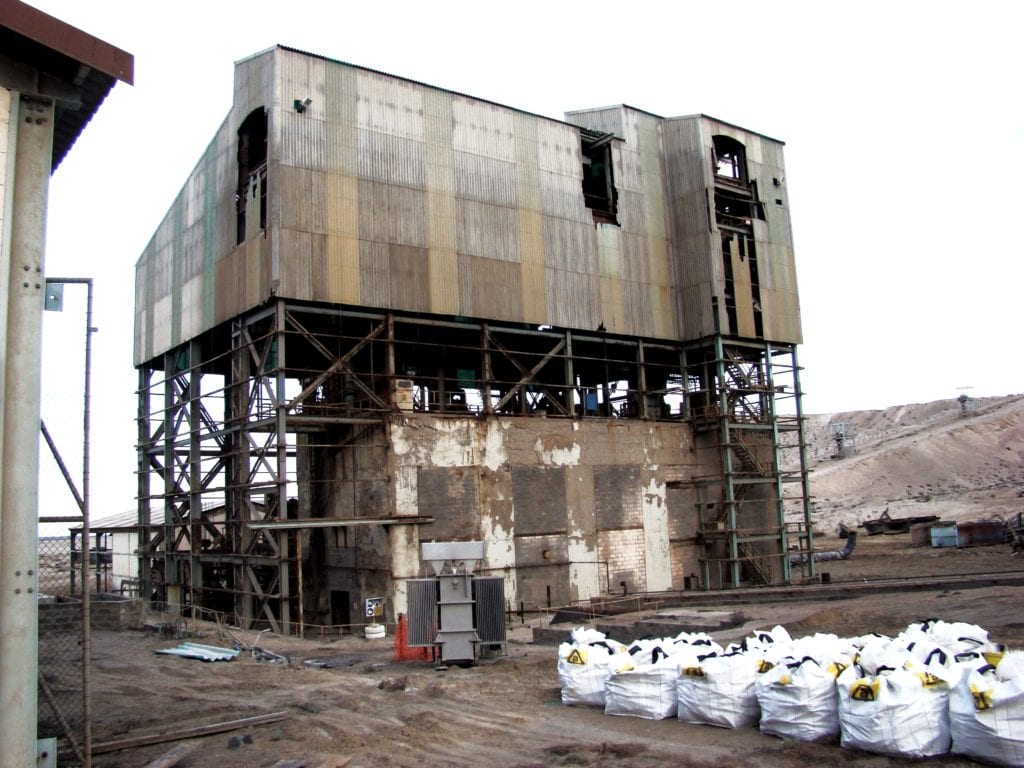
Bagged and tagged hazardous waste – ready for disposal.
In addition, Jet Demolition also offers asbestos abatement, which is often associated with the demolition of older structures. The company is registered with the Department of Labour as an asbestos contractor, and is certified to safely remove all types of asbestos in strict accordance with the relevant regulations and standards, such as the Asbestos Regulations 155 of 2002, Environmental Laws Amendment Act 14 of 2009 and Waste Act 59 of 2008.
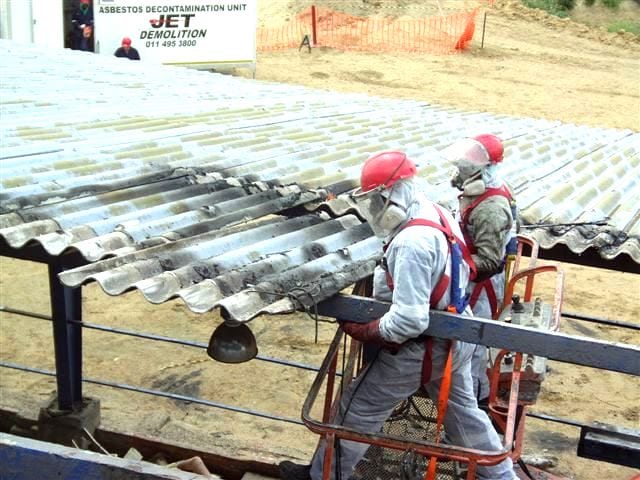
Controlled removal of asbestos roof sheeting
“Our personnel are fully trained
and experienced to identify and handle asbestos, including
asbestos-contaminated materials. We work closely with independent occupational
hygienists to develop a comprehensive asbestos plan of work, and carry out
compliance and air monitoring throughout the course of the project,” Botha
explains.
Specialised PPE (personal
protective equipment) is required to undertake the works, as well as
method-specific equipment such as HEPA filter vacuum cleaners. Jet Demolition
has asbestos decontamination units as part of its fleet, meaning it is able to
offer this service without restriction. Both dry and wet removal and
encapsulation techniques are deployed, thereby best limiting the spread of
asbestos fibres.
While general hazardous materials are mostly prevalent in industrial, chemical, and mining plants, asbestos containing material is present across the board; from ceilings to insulation wool, fascias, piping, floor tiles and window sills. “There is no specific industrial sphere where there is a greater prevalence. The older the facility, the more likely, and more common, asbestos is,” Botha points out.
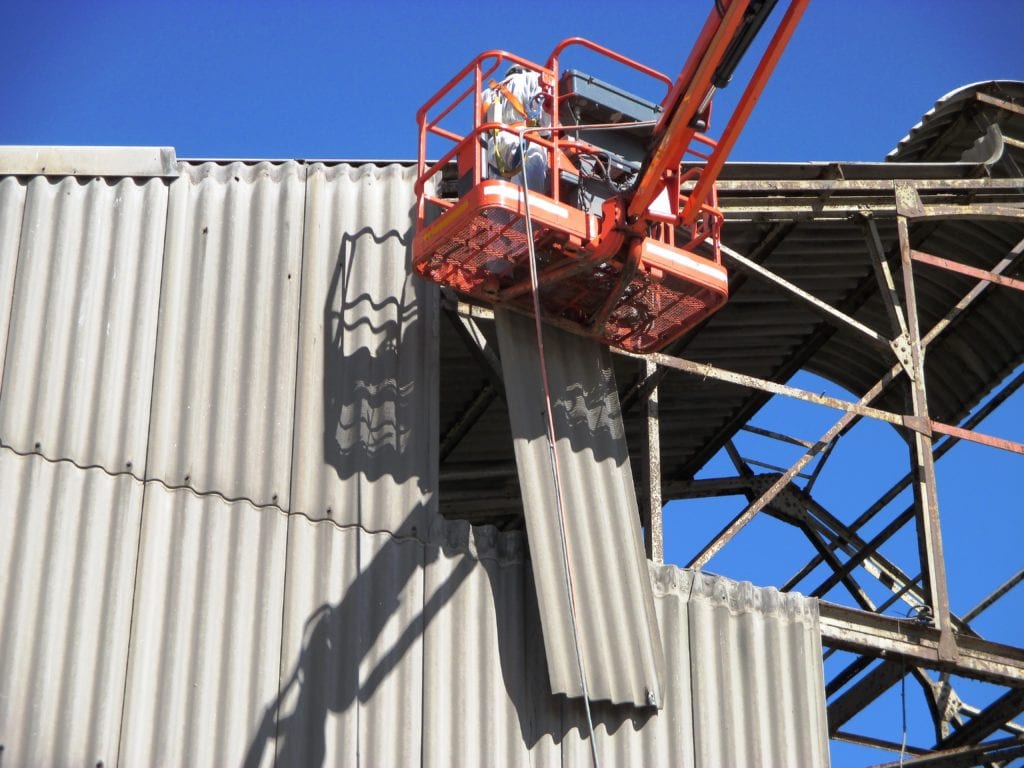
Removal of asbestos cement cladding
The biggest challenge is posed by
asbestos-associated infrastructure. Rail lines used to transport asbestos
material are often contaminated with fly material, resulting in thousands of
tonnes of contaminated ballast. Similarly, old mines are fraught with asbestos
contamination that must be assessed, identified, and mapped carefully, and then
handled appropriately.
In terms of mitigation measures,
Botes explains that most clients hold an asbestos inventory as required by the
Asbestos Regulations 155 of 2002, developed by an occupational hygienist after
extensive investigation and testing, which logs and quantifies the location of
asbestos within these facilities. These registers are often made available to
Jet Demolition to work from.
In facilities where such a
register is unavailable, any material that may indicate the presence of
asbestos is sampled and tested by an approved asbestos inspection inspection
authority. Laboratory tests are conducted to give an indication as to whether
the material is asbestos or a man-made fibre. If positive, Jet Demolition
engages with an AIA (Approved Inspection Authority) that will assist in
identifying, sampling, and testing all materials in order to fully scope the
works.
While this is a niche service,
Jet Demolition offers asbestos abatement and decontamination of uranium and other
hazardous materials as part of its turnkey demolition solutions. “The fact that
we are able to offer asbestos removal as part of our larger demolition offering
is what makes us unique,” Botha concludes.