


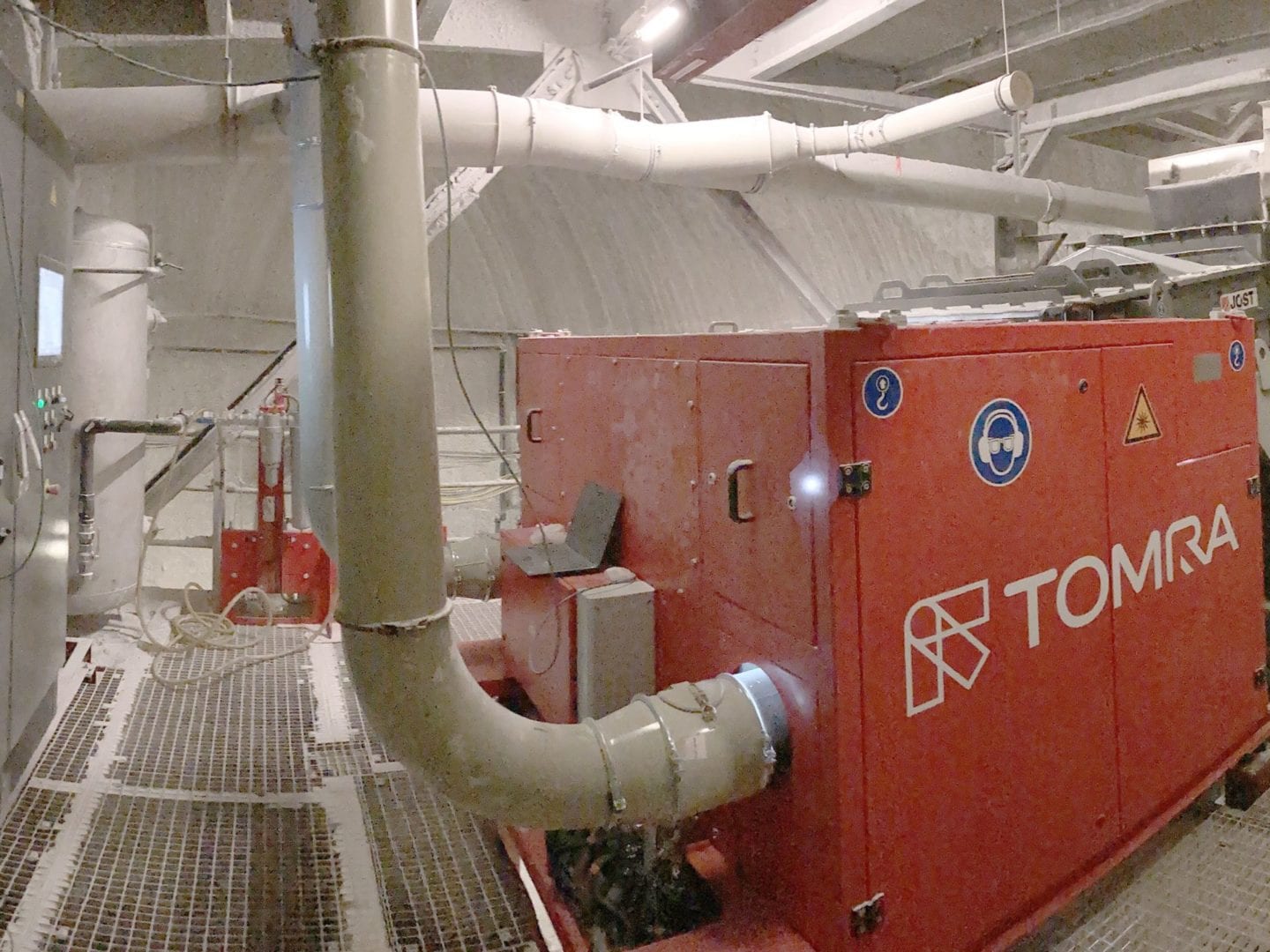
Salt producer K+S Minerals and Agriculture was looking to replace their existing sorting system at the rock salt mine in Grasleben, Germany.
According to the global salt market size 2019-2025 report published by market and consumer data provider Statista, the global salt market was valued at about 28 billion U.S. dollars in 2019 and is forecast to exceed 32 billion U.S. dollars by 2025. The industry growth is driven by a rise in the demand for salt applied in the chemical manufacturing industry – especially in chlorine-alkali chemicals production. At the Grasleben mine, rock salt is extracted from a high-quality underground deposit that stretches across two Federal States. It is processed into a wide range of products, from de-icing salt for winter road services to food-grade table salts and lick stones for livestock and domestic animals. For K+S, consistently achieving certified and guaranteed high purity, compliant with the strict standards of the food industry, is a priority.“The sorting of rock salt is complex and demanding due to its crystalline properties. This leads to strong fluctuations in the appearance of the material,” said Sven Raabe. He is part of the K+S Minerals technical team. TOMRA Sorting Mining recommended colour sorting technology. The team also advised installing the sorter in the underground mine, so that after an initial underground sorting stage, only the coarsely crushed rock salt undergoes further grinding and sieving above ground. Only the valuable product needs to be transported in the shaft, and the final result is high-quality, pure rock salt products in various grain sizes, which are ideal for this application.
Furthermore, waste rejects can be backfilled underground, avoiding storage and emissions on the surface. “With a customized set-up of the light sources we can detect the difference in transparency of the different particles, ensuring the high quality of the rock salt,” explained Mathilde Robben, key account manager at TOMRA Mining. Robben highlighted that this was the first project According to Robben, this was the first solution which provided for underground sorting, which raised specific challenges due to the dimensions and weight limitations of the mine shaft. “In this project we also had to contend with the difficulties created by the Covid-19 pandemic. I am very pleased that we have been able to meet K+S’s requirements and deliver on schedule,” he concluded.
