


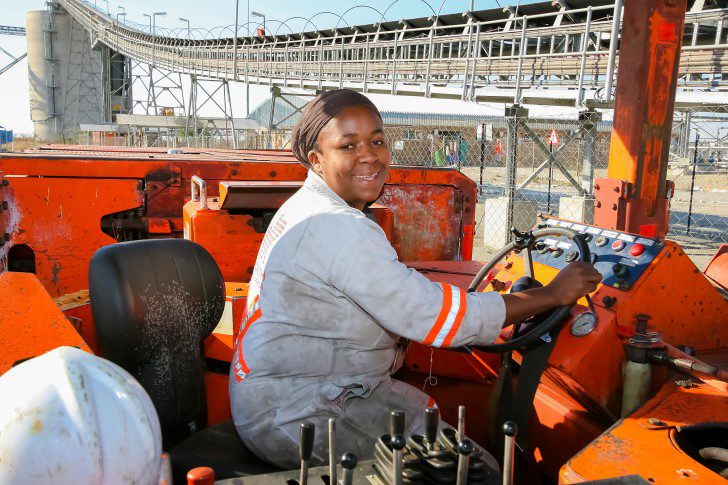
Mining has historically been a highly male-dominated industry, and despite a growing movement toward diversity and inclusion, women are dramatically underrepresented within the sector as a whole, not only in South Africa but around the globe.
While there is legislation aimed at driving gender equality, progress has been slow in achieving this. Promoting gender equality and diversity in mining will take collective effort. Those in leadership positions should empower employees to challenge the stereotypes that exist and to shift mindsets toward a culture of inclusion throughout the industry.Some statistics
According to the Minerals Council of South Africa, the number of women working in the mining sector has increased significantly in the past 15 years or so – from around 11 400 in 2002 to around 53 000 women in 2015, increasing to 54 154 in 2018. However, while there has been growth since gender equality legislation became enforceable, this rise has been slow. The statistics show that women represent just 12% of the mining labour force of almost half a million people, and just 16% of top management and 17% of senior management. This is not a phenomenon that is exclusive to South Africa either. Data compiled for Osler’s 2020 Diversity Disclosure Practices report shows that just 16% of directors at Canadian mining companies in 2020 were women, up from 13% in 2019. Globally, fewer than one in five leadership positions in mining are filled by women. “The mining industry is unfortunately held back by its traditionally patriarchal culture. The above statistics show that the numbers of women in mining are mostly in lower-level positions and this means that cultural change needs to be driven from the top,” says Carol Brandt, Metallurgy Training Manager at PRISMA.Encouraging diversity and inclusion
It is widely acknowledged that diverse and inclusive workplaces are more successful in a world where innovation is a key driver – women think differently and can add value in many areas. While the traditional mindset around mining is that it requires nothing but physical strength and dominance, this has become increasingly less relevant as technology has evolved. Today, innovation is key to success, and job satisfaction has become a driver for many in the workplace. Female leadership styles lend themselves to this, fostering a more supportive and nurturing environment that in turn drives greater employee engagement and improves motivation and morale. Companies recognise this, but acting on it has proven a challenge.“Globally, we see plenty of companies spend time planning how they will hire more women in leadership roles without a clear plan to develop and keep them. Companies must establish a culture with models and policies to include women in the workplace,” says Alet Visser, Office Manager at PRISMA.

