


In 1977, Eben Rust made history when he carried out the first piezocone tests in South Africa, which were also among the first piezocone tests in the world. This was done at Bafokeng mine in the North West province.
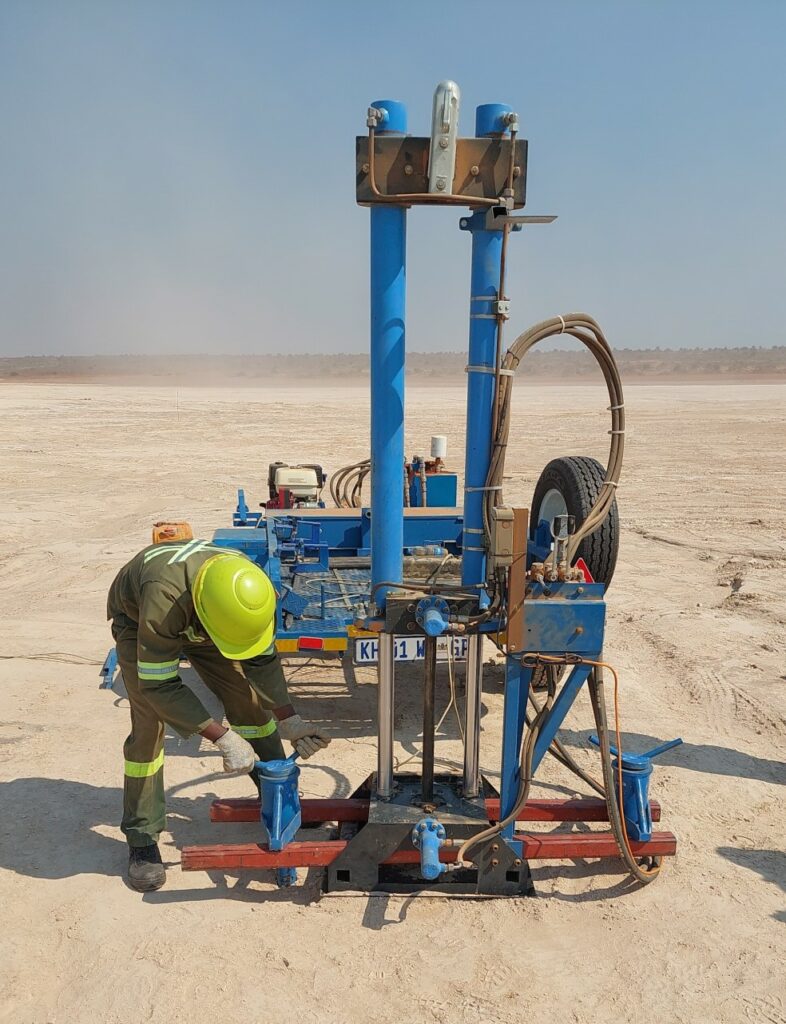
At the time, researchers in Europe were busy developing similar instruments and the very first international publications appeared in 1982. This historical event paved the way for companies such as Osimo to become industry experts in piezocone testing in the following years. After joining the University of Pretoria in 1984 as a lecturer, Professor Rust did extensive research on the piezocone and the interpretation of this data. He proceeded to obtain his PhD and became a pioneer in the field of piezocone testing. In 2000, Rust decided to use his skills and expertise to formally start Osimo. His timing was perfect because piezocone testing had taken off and gained a lot of traction globally. The company’s product portfolio includes piezocone testing and interpretation, piezometers with telemetry, seismic testing and Mostap sampling (subsurface soil sampling), among others. Most mines have tailings storage facilities (TSFs) and, according to Rust, they can be challenging and expensive to maintain. He adds that TSFs are uniquely designed and need highly technical information and calculations to be built and maintained safely to avoid tailings dam failures. A piezocone test is carried out by pushing a piezocone from the surface down into the soil or tailings using a hydraulic rig while monitoring the cone resistance, sleeve friction and pore pressure continuously. The data from the piezocone probe is captured in high resolution and this data is interpreted and passed on to the consulting geotechnical engineers, enabling them to carry out the necessary stability analyses and ensure accurate safety margins. Piezocone tests provide insight into the soil profile and geotechnical properties of the tailings in the TSF. Most TSFs require regular piezocone testing to understand changes in the facilities due to depositing, TSF expansion and other construction, and changes in rainfall patterns. When the testing and sampling are carried out, these are done in a non-invasive manner with a minimal footprint. This is crucial, given that testing is most often done on operationally active facilities.Proudly South African with a growing African footprint
“Osimo has a unique level of in-house expertise. We don’t buy in any hardware or software – we develop everything ourselves,” says Rust. All the hardware, electronics and rigs are developed in-house. Having everything done in-house is a huge advantage because downtime is automatically reduced if something needs to be fixed or replaced. “If something goes wrong, we can strip them down to the bone and rebuild them completely. We know how to do that because it’s our own design,” Rust says. This makes Osimo exceptionally agile. The Osimo team’s hard work is paying off and word is quickly spreading about the company being industry experts in the field of TSF probing. Rust mentions that the company has probed most active TSFs in South Africa and has built a solid reputation of trust with mining companies and engineering firms. The efforts of its dedicated, hard-working team has produced many impressive testimonials by happy clients, which opened further doors for Osimo throughout Africa. Osimo has extensive knowledge in geotechnical engineering and piezocone testing, and the combination enables Osimo to generate the testing data and help engineers interpret the data and its impact. Over the past decade, Osimo has expanded its capacity from the original single rig and team to a total of nine cone penetration test (CPTu) rigs with teams operating across sub-Saharan Africa. Osimo recently successfully completed several projects in Kenya, the DRC, Mali, Guinea, Zambia, Zimbabwe, Namibia (among others), and several projects in South Africa.Ongoing monitoring of pore water pressure
Traditionally, the pore pressures in a TSF were monitored with standpipe piezometers that were read with handheld dip meters. These were very unreliable, providing suspect data, which was ignored by the engineers. Vibrating wire piezometers (VWPs) started to appear on the TSFs and these were read with a handheld read-out – a very manual process requiring great discipline and manpower. TSFs are significant structures, in many cases requiring a walk of over 8 km to measure all the piezometers. It was not commercially viable to monitor these devices in this way. Over the years, the need grew among civil and mining engineers to continuously monitor piezometers throughout the entire mine. Around the turn of the century, long-range, low-power radio communication protocols were developed and enabled simple, low-cost, stand-alone communication.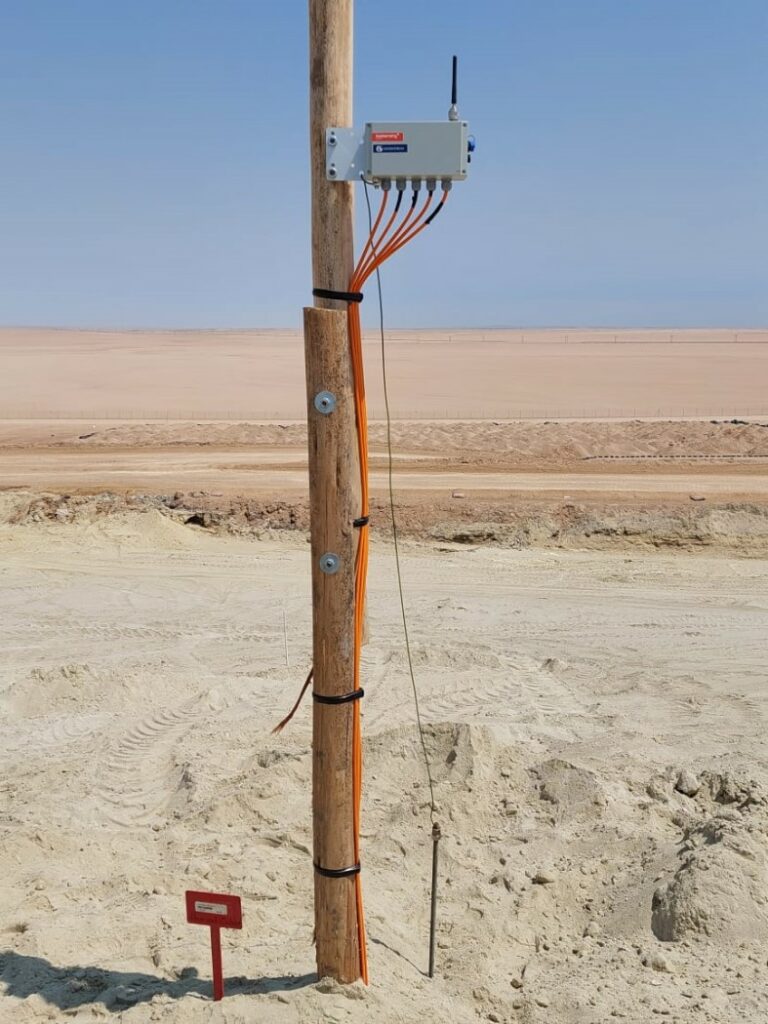
There is a bit more to it than just correctly installing the VWPs, though, and that’s making optimal use of the data being recorded by the devices.
Tailor-made IoT solutions that benefit the mining industry
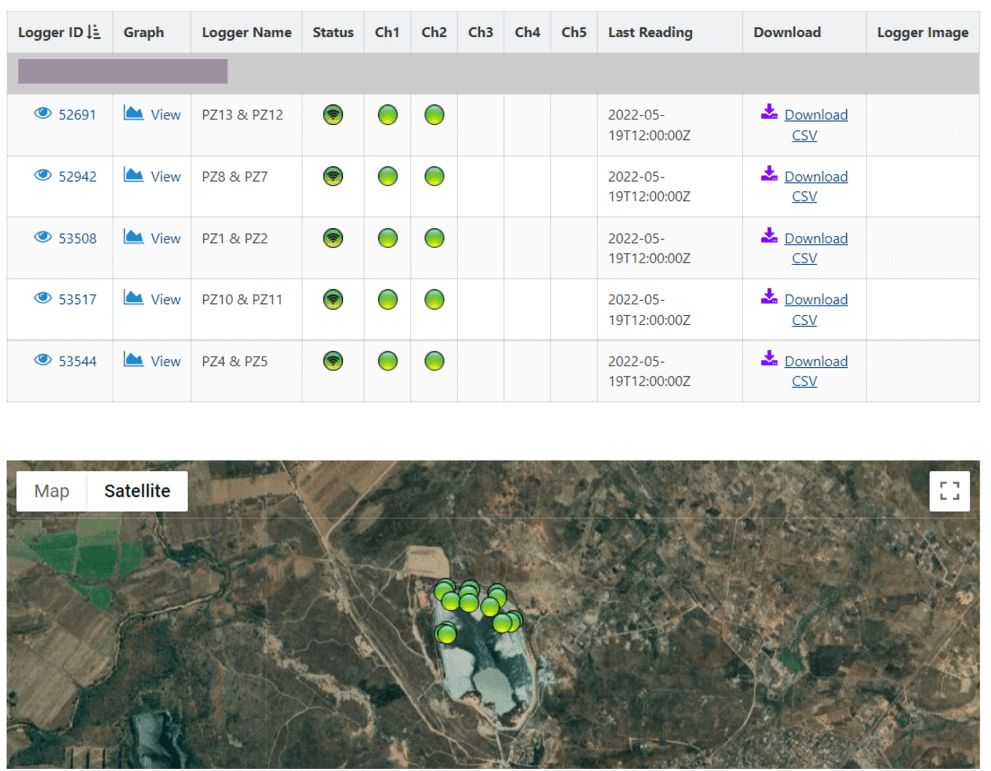
After obtaining his industrial engineering degree (and later an MBA), Pieter Horne spent more than 15 years in the corporate environment. He explains that he always had a keen interest in software development and the internet of things (IoT). An opportunity opened up that enabled Horne to follow his passion. “As the internet of things exploded, I started exploring IoT software and hardware and saw an opportunity for this to be a significant value add for the mining sector,” Horne says. In 2021, he established InsightEdge as an IoT and consulting firm. InsightEdge’s IoT offering focuses on the software that makes it easy for engineers and mines to receive their data in a single location for near-real-time monitoring. Osimo installs the telemetry and InsightEdge collates all the data. The InsightEdge platform visualises the data for the engineers, providing trending capability and insight into changes in pore water pressure, standpipe levels and other critical parameters such as the phreatic surface. The platform is also configured to automatically alert engineers if any critical thresholds are exceeded. “It is a world-class, database-driven cloud platform that enables you to see trends over time to monitor the critical measures on TSFs. Currently, we monitor 19 mines across Africa,” says Horne. Together, InsightEdge and Osimo form a perfect partnership with a great service offering. “Osimo does the testing and installation of sensors and telemetry, and InsightEdge helps the engineers and mines to easily access and use their data,” says Rust. The partnership also enables other monitoring capabilities, including weather stations and radar-driven water level monitoring.An unstoppable partnership
Osimo and InsightEdge offer a comprehensive solution for mines where they can provide regular testing combined with proactive monitoring and servicing of telemetry. This has resulted in opportunities for mining companies to enter into a maintenance agreement with Osimo where maintenance is conducted on the mine’s entire system, proactively ensuring that every site has fully functional infrastructure providing accessible reliable data. This ensures engineers can focus their time and efforts on managing and ensuring safe TSF operations in this key sector driving economic growth in Africa.Contact details
For more information, contact InsightEdge:
Telephone: +27 82 332 1180
Website: www.insightedge.co.za

