


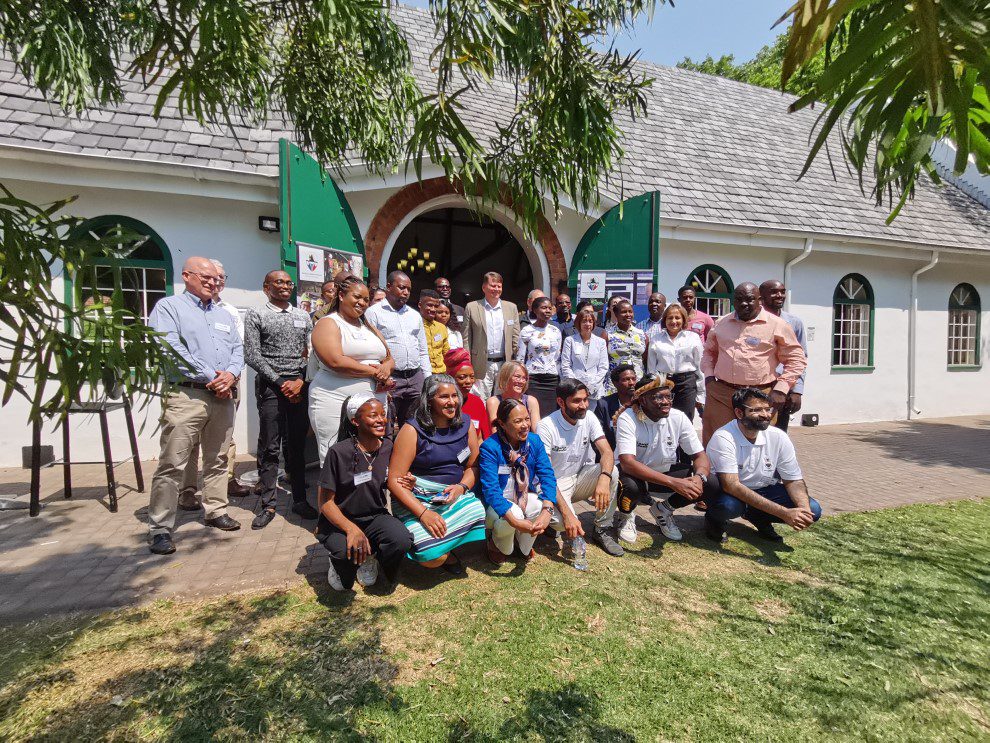
Wits Mining Institute (WMI) recently hosted its inaugural annual Seminar, which highlighted the value of innovative research in developing mining technology for the future of the industry.
The Seminar coincided with the University of the Witwatersrand’s (Wits) 100-year celebration since its doors opened in 1922. Speaking at a WMI Seminar held at the Wits Club during the last week of September, WMI director Professor Glen Nwaila noted that although the mining industry in South Africa had some turbulent times during its 100 years, the WMI continued to innovate while holding at its core the sustainable provision of minerals to support the future wellbeing of the industry. “The WMI looks to specifically create the environment to foster the characteristics for research, innovation and development, alongside excellent relationships with our stakeholders,” he said. Under the theme of ‘Turning research curiosity into 21st Century minerals industry performance, relationships and technology’, Nwaila noted that it could not have developed advanced technologies for the 21st Century model of mining – which included SmartMine Internet of Things (IoT), wearable technologies and sensors, safe blast imitation and optimisation and point-cloud surveys, without ongoing, multidisciplinary partnerships. He further highlighted that through this research, innovation and development, and ongoing public-private partnerships, Wits was not only able to progress cross- and trans-disciplinary research and solutions for the mining industry but was also able to address new and emerging challenges. This included stumbling blocks under the umbrella of environmental, social, and governance (ESG), the circular economy, mine waste, sustainable process engineering, orebody modelling and geotechnical engineering. Another challenge faced by the industry as mines continue to develop, is the question of capacity development. “The WMI cannot stagnate, as the mining industry continues to be in flux. The research will continue to develop alongside industry, which is developing at a rapid pace.” He added that not being hindered by conventions, data and capabilities of any discipline have been some of the key factors in its success. “Here at the WMI, we have a curiosity, a technical capability and determination to thrive. Understanding market realities and the management of high-risk and exploratory data-driven projects has also put us at the forefront,” he pointed out.Industry perspective
Delivering his keynote speech on the first day of the event, diversified miner Sibanye-Stillwater CEO Neal Froneman highlighted that the Sibanye-Stillwater DigiMine laboratory at Wits was a prime example of one of Sibanye’s strategies to create a better mining world. “Fundamental and applied research within the DigiMine laboratory provides us with strategic intelligence on relevant digital advances to institutionalise innovation.” Sibanye-Stillwater, which is sharpening its focus on the battery metals space, is further pursuing its 3D strategy to address forces of change within the industry. Dubbed ‘grey elephants’ – a highly probable, high impact, yet neglected catalyst – Froneman pointed out that the company was working towards finding innovative solutions to counter these challenges. This included an ageing workforce, more pandemics, an angry planet, inequality, multipolarity, angry people and intelligent advances. “Our 3D strategy is designed to harness opportunities, manage a complex environment, and facilitate continued growth. We intentionally find new ways to do things better,” he said.Illustrating some of the work carried out at the DigiMine laboratory, aimed at making mining safer and more sustainable through the use of digital technologies, Katekani Maswanganyi, a shift supervisor at Sibanye-Stillwater’s platinum division, highlighted how, through digital technology and innovation, mines are no longer working hard but smart, tackling challenges such as mining at depth, mining lower-grade reserves, labour disputes and unauthorised access to mining facilities.
Having achieved her MSc in Mining Engineering through the DigiMine laboratory at Wits, Maswanganyi further highlighted how the digitisation of the mining industry has also advanced the role of women in mining. “Mining will always remain a labour-intensive working environment, with 43% of female recruits not being physically fit for the nature of the work,” she said. “With modernisation in the mining industry, which offers various levels of automation, we will be working alongside machines, with hazardous work being done remotely and physical strength no longer being a mandatory requirement,” she noted. This she highlighted, would not be possible without ongoing research and facilities such as the Sibanye-Stillwater DigiMine laboratory.
