


The recent surge in Chinese investment in Africa has exposed the need for local policymakers to boost regulation and administrative capacity if they are to manage their forests and other natural resources sustainably, a recent study of Zambia shows.
The study conducted by scientists with the Centre for International Forestry Research (CIFOR), sought to assess the developmental implications of China’s increasingly prominent economic and political role in Zambia.Overly favourable terms
The southern African country proved a useful place for such a study, thanks to its long and diverse history of relations with Beijing – from the completion of the 1 860-kilometer Tanzania-Zambia railway in 1975 (then China’s largest-ever construction project in Africa), to the 2011 election of President Michael Sata, who opposed terms seen as too favourable to Chinese firms operating in Zambia. “I have noticed over the years the Chinese move across scales, starting by buying a few logs of timber and moving on to bigger operations,” said Zambia-based CIFOR researcher Davison Gumbo, a co-author of the study. Much of the involvement by Chinese companies, financial institutions and state agencies in the past 15 years has focused on mining, targeting Zambia’s rich copper and cobalt deposits. The study details hundreds of millions of dollars in investments by China’s state-owned firm Non Ferrous Company Africa (NFCA) in Zambian mining concessions, copper smelters and infrastructure developments.Mining driving deforestation
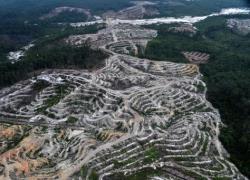
In addition to providing a pattern of international investor and government behaviour in the wider natural resources sector, Gumbo said the focus on minerals was also relevant to forest management in its own right, he said: “A key driver of deforestation is mining, and it is driven by Chinese investment.” Gumbo explained that beyond the space directly affected by open pits and associated infrastructure, indirect impacts of mining on forests made it the largest cause of forest loss in Zambia. “Mining areas have limited energy supply for low-income labour, and people go out and buy charcoal, which impacts surrounding areas. Miners also look for small land plots to grow cassava or maize, and they encroach on forests,” he said.International tax breaks
Soaring Chinese investment in the early 2000s coincided with the introduction of tax breaks for international investors and incentives for the mining sector, including ‘development agreements’ dividing royalties on minerals by five for new entrants.Opposition parties and civil society began to protest that the government was not capturing sufficient revenues from Zambia’s most valuable resources, while investors made record profits, leading to the 2011 election backlash, the scientists noted.
The development of a special economic zone with new tax incentives, largely occupied by NFCA and its Chinese partners companies, ‘runs the risk of becoming a virtual economic enclave’ or a ‘spatial fix’ of foreign capital (and perhaps even cultural) accumulation,’ the researchers wrote.
