


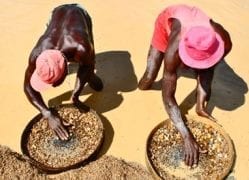
Mali plans to boost funding opportunities for its artisanal miners and to improve the policing of the sector.
Mali is Africa’s third largest gold miner behind South Africa and Ghana and from about 350 sites contributed about 30% of the 67.4 tonnes it exported in 2013. Artisanal or small scale mining produces about a third of the country’s gold exports.Access to equipment finance
The Malian government is negotiating with banks to give miners easier access to financing for equipment, and newly formed cooperatives would be supervised and revenues distributed equitably, said Mali’s Chamber of Mines president Abdoulaye Pona – speaking at a mining reform meeting in September. “With this system, the miners will no longer continue to dig holes from right to left, here and there. Mining will be done in selected corridors and at the end of the activities we will close the holes to restore the ecosystem,” Pona said.

