


South African platinum houses face continued challenges to return to profitability as the sector slumped to a five-year low last week.
The drop in price, said to be an indicator that European demand is faltering for the metal used in pollution-control devices in cars, comes as firm’s reposition themselves for growth protracted strike that ended in June.Fading investor interest
Lonmin spokesperson Sue Vey tells Mining News that the platinum market has been oversupplied for several years. She said the prolonged strikes in the sector increased the uncertainty of supply that began earlier in 2012 and 2013 with mine closures unrelated to industrial action. “But the strikes have not helped,” said Vey. “We can see that as the free market price of the metal has not moved appreciably in response to the SA output reduction. That is in part because there is plenty of platinum in warehouse stocks built during the years of over-supply. That can now be released onto the market.”Platinum decline
Platinum for immediate delivery declined $4 to fix at $1 273 oz in London on Thursday after falling to $1 263.38 the lowest since 2 October 2009, reported Bloomberg. In the third quarter, platinum fell 12%, the most in more than a year in a 60-day period owing to fading investor interest, according to data compiled by Bloomberg. South Africa’s second and third largest platinum producers Impala Platinum and Lonmin shares declined 31.7% and 40.02%, respectively in the year-to-date, noted Business Report. The world’s leading producer Anglo America Platinum withstood a softer blow to its share price, suffering an 8.99% share decline.Mechanisation in sector
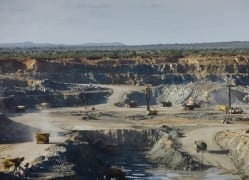
Amplats announced last week that its open-cast Mogalakwena platinum mine remained completely unscathed during the prolonged strike in Rustenburg’s strife-torn platinum belt. “Mogalakwena is a standout cash flow and platinum metal generating operation,” Amplats told visiting mining analysts in a slide presentation in September. Mechanisation in the platinum sector would be costly and the mining companies need to be convinced it is worth it, according to analysts.“They would need to believe that any investment in platinum mechanisation would significantly drive them down the cost curve,” mining analyst Alison Turner at Panmure Gordon, told Reuters in a 2013 interview.

