Rio Tinto and Sinosteel Corporation today announced their intention to advance discussions for a second extension to the Channar Mining iron ore joint venture in Western Australia’s Pilbara region.
This followed the signing of a Heads of Agreement at Parliament House in Canberra by Rio Tinto chief executive Sam Walsh and Sinosteel Corporation president Xu Siwei.
Heads of state
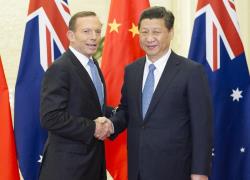
Chinese President Xi Jinping and Australian Prime Minister Tony Abbott attended the signing.
The original Channar joint venture was signed in 1987 and provided for the production of 200 million tonnes of iron ore. It was extended in 2010 to produce a further 50 million tonnes of iron ore.
“The Channar joint venture was a ground-breaking partnership formed in the early stages of the development of the Chinese steel industry,” said Walsh.
“It’s now one of China’s longest running and most successful partnerships with Australia and a model for economic co-operation between our two countries.
Mutually beneficial partnership
“The signing demonstrates the commitment by Rio Tinto and Sinosteel to continue exploring opportunities that build on a mutually beneficial partnership that has developed over many years.”
Xu said “The signing of this agreement is another milestone in 27 years of successful cooperation between Sinosteel and Rio Tinto. As a large international enterprise providing comprehensive services for the Chinese iron and steel industry, Sinosteel is committed to developing broader and deeper cooperation with Rio Tinto.”
The Channar joint venture (Rio Tinto has a 60% share, Sinosteel 40%) owns the Channar mine, 60 km south of Tom Price in the Pilbara region.
Largest in the world
The operation is managed by Rio Tinto. Sinosteel has 100% offtake rights to Channar joint venture production (Channar ore feeds into Pilbara Blend).
The original Channar joint venture was one of the largest Chinese investments in the world and it was the first overseas mineral resource project entered into by a Chinese enterprise.
The timetable for reaching a mutually acceptable agreement for a second extension is before the end of the current extension term, which is currently expected to be during 2016.