


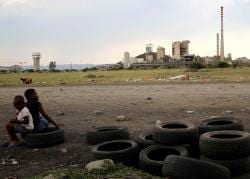
Government has allocated R18 billion to improve the socio-economic conditions of distressed mining communities across the country.
Headed by the Inter-Ministerial Committee (IMC) in charge of revitalising mining communities, the projects include housing and wellness projects. “Overall R18 billion has been dedicated to ongoing work in distressed mining communities, benefiting the following provinces: Eastern Cape; Free State; Gauteng; KwaZulu-Natal; Limpopo; Mpumalanga and North West. “The bulk of this funding is from government, with mining companies contributing approximately a third of the funding,” President Jacob Zuma said in a statement on Tuesday. President Zuma appointed the IMC shortly after the Marikana tragedy in which over 44 people lost their lives during labour unrest at the Lonmin mine in the North West town in 2012. The mandate of the IMC is to oversee the implementation of integrated and sustainable human settlements, improve living and working conditions of mine workers and determine the development path of mining towns and the historic labour sending areas. “The fundamental mandate of the IMC is to change the face of mining in South Africa working with business, labour and other sectors.” The President said government has undertaken a socio-economic diagnostic study of the 15 prioritised mining towns and 12 prioritised labour sending areas to better understand the extent of the challenges in each town and to determine the most appropriate actions to address these. “In changing the face of mining, we are also drawing lessons from other countries,” he said, mentioning support of the Australia-Africa Partnership Facility. He said the country was benchmarking the policy and regulatory system governing the mining sectors in Australia, Chile, South Africa, and Zambia.
Housing projects
Detailing the projects underway, the President announced that the Department of Human Settlements, supported by its agencies, was implementing about 66 public sector housing projects in the 15 prioritised mining towns.

