


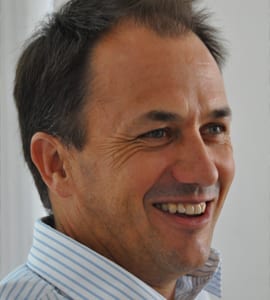
The current uncertainty in the South African mining sector has seen AIM-listed iron ore and manganese explorer and developer Ferrex amend its business strategy.
The company has a change in regional focus MD Dave Reeves tells Laura Cornish. Only last year, Ferrex was fast-tracking its South Africa-based Malelane iron ore project towards production. The company has injected a vast amount of cash into the project and is already far advanced in terms of mining and processing knowledge. Despite this, Reeves has seen a drastic decline in investor confidence in South Africa and has subsequently placed his focus on projects located outside the country. Malelane iron ore (South Africa) – on the back burner Malelane, in which Ferrex holds a 74% interest, incorporates prospecting rights over a 4 192 ha tenement in Mpumalanga. It could be described as the ‘perfect’ iron ore development project for a junior. It is ideally located in terms of infrastructure, has near access to water and power and is only 6 km from a railway line that runs to the Port of Maputo in Mozambique, 170 km away. A substantial target and maiden joint ore reserves committee (JORC) code compliant inferred resource has been defined and estimates on an operational size, capacity and lifespan have already been determined. An application for a mining permit also lies on the horizon. Only a pre-feasibility study and environmental studies, including the drafting of the social and labour plan in preparation for submission of its mining lease application, are necessary to take Malelane through to development. Even so, this is no longer the immediate priority or focus. “It is difficult to raise finance for projects in South Africa at the moment, especially as a junior. The level of investor uncertainty in the country has forced us to review our assets and ultimately, the decision is that our cash will be better spent on our projects in Togo and Gabon,” Reeves points out. He says that this is not necessarily a reflection of the company’s own view, as Ferrex still believes South Africa has many advantages such as excellent infrastructure, local skills and engineering prowess, it is a reflection of the wider investment communities view. Not so long ago, last year in fact, Malelane was set to be Ferrex’s first producing mine. It’s predicted operational status, however, has been shifted from first to third position. “It is still a good project with a high profit margin, so we have every intention of developing it and will still apply for a mining permit later this year.” Considering the average time frame estimate for government to grant a mining licence is as much as 18 months, Malelane still has a long road to walk. The Malelane potential An exploration target of between 775 and 930 Mt at between 34 to 36% iron, along a three-tiered banded iron formation (BIF), has been defined and a maiden JORC code compliant inferred resource of 139 Mt at 37% iron (at a cut-off grade of 20%), was declared in March 2012. A metallurgical test work programme commenced during 2012, which determined that dense media separation and reflux classifiers would deliver the best beneficiation results and an iron yield of 58% and a mass yield of 43%. “The project could be economically viable as an opencast mining operation, producing 1.8 Mtpa at 57% iron over a 16.6-year mine life. At these production rates and the estimated net profit value (US$523 million) [R4.69 billion], the project is positioned in the lowest quartile for capital intensity of new iron ore projects globally,” says Reeves. Nayega manganese (Togo) – first operational mineA definitive feasibility study is currently under way at the company’s northern Togo-based manganese project. It is due to be completed no later than mid-2013.
“We intend to finalise the bankable feasibility study later this year, and have already appointed DRA Mineral Projects to complete detailed engineering design for a beneficiation plant.” This mine has the potential to deliver about 250 000 tpa of manganese product as an opencast operation with no waste stripping ratio. “Initial metallurgical test work has shown that Nayega’s ore can be beneficiated via a low-cost process route of screening and gravity concentration to produce a saleable manganese product. We aim to start production as early as 2014, making the project our first operational mine,” Reeves outlines. Nayega is a residual manganese deposit, comprising lateritic and saprolitic mineralisation extending up to 10 m below surface. Mineralisation, which is on average 3.3 m thick, occurs over a strike length of 2.2 km at widths of up to 500 m. The project has an estimate indicated JORC code compliant resource of 7.3 Mt at 14.7% manganese. The project consists of five exploration permits covering 92 390 ha and has direct access to the regionally important deep water port of Lome, 600 km away. Mebaga iron ore (Gabon) – fast-tracking resource definition Gabon is a stable, pro-mining country – especially in relation to South Africa at present. “There are far less prescribed regulations and unnecessary uncertainty; so despite the lack of skills when compared to South Africa, we are pushing forward with this project and anticipate it to be our second producing mine,” Reeves notes. Ferrex has an 82% holding in the 309 km² high-grade direct shipping iron ore deposit, which extends from Gabon into the Republic of Congo and Cameroon. “We are implementing a fast-tracked exploration plan targeting the definition of a high-grade iron ore JORC code compliant resource in 2013. Drill rigs were mobilised to site in May and, based on historical information, the company is anticipating high grade intersects and mineralisation. Our immediate priority is to increase the project’s resource, which, if historical data is correct, is currently 20 Mt of iron ore with a 60% average grade.” Like Malelane, Mebaga’s deposit is a BIF, with a strike length of more than 20 km at widths of up to 2 km. In terms of infrastructure, the project is only 30 km from a sealed highway. The main rail line is 100 km South and terminates at the Port of Owendo, which currently exports 3.5 Mtpa of manganese. In addition, the government is building a hydro power station only 40 km from the deposit and is upgrading all roads in the area to highway status. Ferrex also owns a 74% stake in the blue sky Leinster manganese project in South Africa, which is by far its smallest priority. “Ultimately, our ambition to be a 5 Mtpa iron ore player remains realistic. We have every intention of achieving this in the long run by advancing our low capex deposits, which offer significant value uplift potential through resource delineation, into production,” Reeves concludes.
