


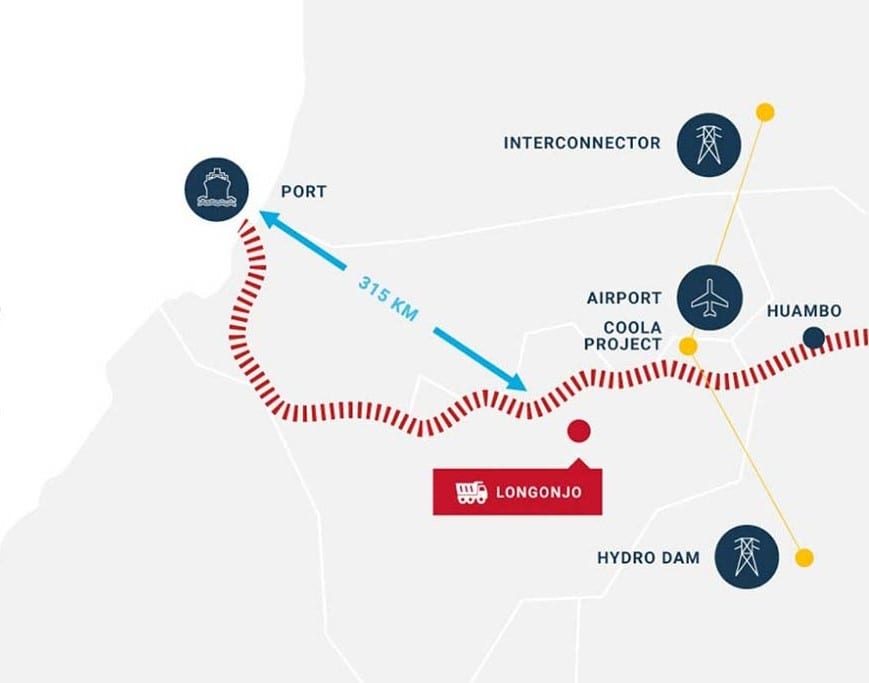
Pensana Rare Earths has provided an update on the developments with bringing the Longonjo Project online as the first major rare earth mine in over a decade.
Two studies are currently underway, a feasibility study into the production of a mixed rare earth sulphate in Angola, which is being undertaken by a number of internationally recognised consultants in Perth, Western Australia and the recently announced Wood Group study into the establishment of a UK-based processing facility to produce separated rare earth oxides. The Longonjo mine and concentrator study is well advanced with the capital costs in line with the $130 million reported in the Preliminary Feasibility study in November 2019. “The response to our announcement that we are looking to establish a UK based rare earth processing facility as a key part of a sustainable mine to magnet supply chain to supply the burgeoning EV and offshore wind industries has been overwhelmingly positive,” said Pensana chairman Paul Atherley. In March 2020 the scope of the studies was expanded to include the processing of the concentrate to produce a mixed rare earth carbonate (MREC), and in early October a high grade MREC was successfully produced. Atherley added that it was clear that the proposed investment would receive strong support across various stakeholders.Subsequent to this, a resin-based process route was developed which yields a high grade mixed rare earth sulphate, an ideal feedstock for the proposed UK separation facility. This innovative process route has the potential for lower capital and operating costs and is being actively pursued.
Project manager Paradigm Project Management has recently gone out with several equipment packages for quotation from suppliers and contractors in preparation for the commencement of construction of the initial infrastructure and bulk site services at the Longonjo Project in the first quarter 2021. The Wood Group study into the establishment of a rare earth processing facility in the UK is well underway and is expected to be reported in January 2021. The study has highlighted the internationally competitive power, labour and reagent costs at each of these post-Brexit Freeport locations in the Local Enterprise Partnership zones of Merseyside, Tees Valley and Humber. A decision on the location is expected shortly. “We are expecting to draw the various studies to a decision point in January and are looking forward to reporting on the capital requirements and the overall economics of the investment at that time,” concluded Atherley.
