BME has developed products and systems to manage safer blasting in conditions where there is sulphide-bearing ground, which can present numerous risks to users of ammonium nitrate (AN) based explosives.
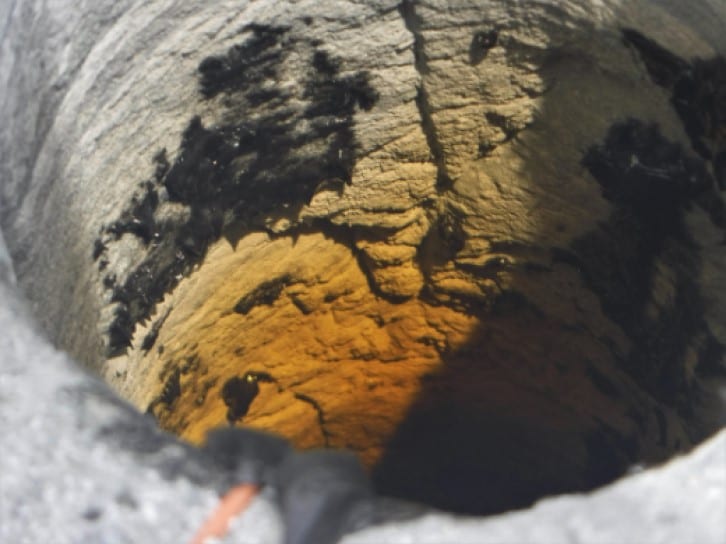
“We have evolved our emulsion explosives and our testing methodology to deal with the risks posed by reactive ground,” said Dr Rakhi Pathak, BME’s senior product manager. “This has allowed us to routinely conduct blasting safely under these conditions at various customer sites.” Dr Pathak noted that the exothermic reaction between AN and sulphides can lead to premature detonation of the explosive or can at least undermine its performance. The occurrence of reactive ground is more common than realised, so effective management of reactive ground is critical, she said. Occurring in sulphide-bearing rock in iron ore and copper deposits among other minerals, it can also be difficult to identify – often occurring only in pockets around a mine site. The risk can be aggravated by conditions of acidity and rock weathering. Among the indicators of sulphide-bearing rock are white and yellow salt staining on exposed rock and faces, or water vapour being emitting from blast holes, according to D Scott Scovira, BME’s Global Manager for Blasting Science. There could also be spontaneous combustion observed in ore stockpiles, or the presence of sulphide dioxide gas – as well as acidic water conditions and evidence of corrosion on the site. BME has developed a specialised emulsion explosive formulation for reactive ground – INNOVEX RG – that has been successfully used in South African and Zambian mines. The product contains additives to inhibit exothermic reactions in ground containing sulphides and/or other reactive materials. BME has developed a specialised emulsion explosive formulation for reactive ground – INNOVEX RG – that has been successfully used in South African and Zambian mines. The product contains additives to inhibit exothermic reactions in ground containing sulphides and/or other reactive materials.
Addressing mine challenges
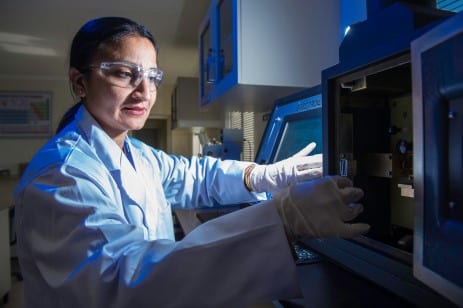
According to Dr Pathak, the challenge for mines, is that they seldom have the equipment or experience to identify and test for reactive ground – and this is where BME’s service has evolved significantly in recent years. “We are geared up with relevant on-site scientific tools and facilities to screen and test the rock, make the necessary findings on the type of ground being blasted, and recommend the right product,” she said. “This includes the use of hand-held XRF metal analysers for screening and initial analysis, as well as providing the required testing facilities to quickly and cost-effectively generate results that can guide the correct selection of explosives.” Importantly, testing at BME’s R&D laboratory at Losberg, Gauteng is conducted on the rock’s interaction with various emulsion explosives to industry standard and in-house protocols. This allows BME to simulate mine-site conditions in the laboratory, testing the level of exothermic reaction before specifying the most suitable emulsion mix. The company also has laboratory facilities in Zambia.