


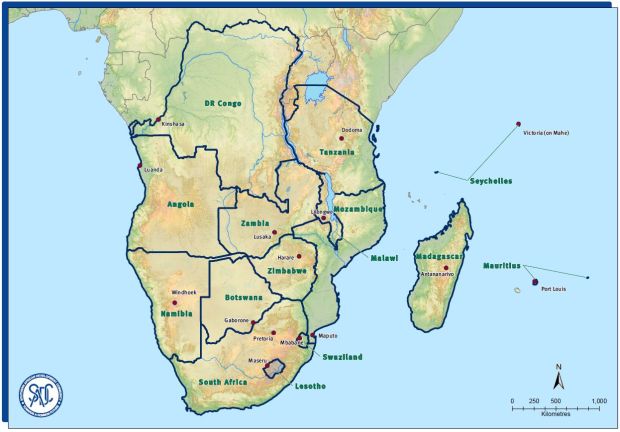
With mining seeing a more sustained improvement in many Southern African Development Community (SADC) countries, fortune will favour those miners and supply partners with experience on the ground.
By Ralf Hennecke*
It has been an encouraging few months for mining in the region. While the annual growth figures for March and April this year were expected – as they were off a low base from the Covid-19 lockdowns last year – the positive trend has continued from June. Strong commodities include iron ore, platinum group metals, gold, manganese, copper and cobalt, benefiting the economies especially of South Africa and Zambia Improving prospects for diamonds, uranium and coal also make for some optimism in countries like Botswana, Namibia and Angola. In the longer term, there is a hopeful outlook for platinum and other minerals in Zimbabwe. The key to mining success in the region, however, lies not with commodity prices; these will always be cyclical and unpredictable. It resides really in the institutionalised knowledge of the companies that operate here, and their understanding of how to respond constructively to the prevailing conditions and future trends. Among these considerations are evolving regulations on local business participation and a heightened concern with safety and environmental impact. Responsible mining companies have embraced these principles, and it has long been standard procedure for service providers to align with the stringent expectation of zero-harm.
Environmental and commercial sustainability
In line with global trends, mining in southern Africa is seeing the active acceptance of environmental and commercial sustainability as two sides of the same coin. It is also a direction driven strongly by technological innovation. As the sector pursues the goal of smart mining operations, so the region’s miners are applying digital tools to streamline activities, raise efficiencies and reduce carbon emissions.We are seeing this first-hand in the blasting sector, where the use of software, electronic detonators and other digital tools are constantly fine-tuning both the quality of blasting and the productive impact on the way mines work. By ensuring better fragmentation, for instance, energy use is optimised in downstream functions like loading and comminution – leading to less power consumption and a lighter carbon footprint.
Few of these innovations can be achieved, however, without decades of experience in the field, where mines and technology providers can develop and apply their technical insights. Nowhere is this currently more telling than in the field of data generation, gathering and analysis. As mines look to leverage real-time information from every machine and function on their sites, so technology must be developed to interrogate data for better and quicker decision-making. Not only must this data be intelligible and useful, it must also be integrated into the mine’s chosen platforms. This has required suppliers of services, equipment and materials to develop a depth of expertise in the digital space so that – whatever their core offering to mines – it can be tracked, measured and assessed through the mine’s dashboard. Beyond the operational efficacy of such systems, mines and their partners must also be aware of how best to ensure the security of this data – and comply with evolving local regulations governing data protection. Once considered a niche field for technology specialists, data management is increasingly becoming core to every sector including mining. The mineral opportunities of the SADC region remain exciting to all of those involved. It is the task of the mining sector to realise those prospects in the most responsible and sustainable way – sharing the value with a broad base of stakeholders. Those with local experience and expertise are best placed to do this. *Ralf Hennecke is BME’s Managing Director for SADC
