In recognising that water is a finite resource, all industries and consumers need to implement responsible water management practices.
Responsible water management practices should not merely be a tick-box exercise to meet targets and benchmarks, but a means of protecting the environment and ensuring future sustainability and economic development.
South Africa is a water-scarce country (the 30th driest in the world), with many established mines geographically located in source-poor and drought-stricken regions of the country. The mining sector is estimated to consume 5% of South Africa’s water resources and, while mining operations require large volumes of water, mines have typically adopted measures such as closed-circuit water cycling to minimise the quantities used. In many such instances, water losses from evaporation or other causes are the only reason for the addition of ‘new water’ to the circuit. Where mines do not require potable water for operations, reuse of water from the domestic sector through partial treatment of sewage further drives down water consumption.
Creating an effective water demand management and processing solution on a mine site requires planning and the establishment of growth parameters as well as requirements for the system. The first SBS mining installation was completed in 1999, supplying a potable water storage tank at a coal mine in Ogies, in Nkangala District Municipality, Mpumalanga, South Africa. Over the past two decades, the company is proud to have supplied many liquid storage solutions to mines across South Africa, into Africa and further afield, and has worked with many top mining companies to deliver effective water and wastewater processing and storage solutions.
As with any industry, various factors need to be taken into consideration when planning a mine water system to maximise the gains achieved. In the mining sector, these include, but are not limited to, the following:
System requirements for fresh or process water and water sources
It is important to consider what the system requirements are in order to identify a suitable system. Some of the factors to consider include:
Will water used in the system be freshwater from a municipal supply? Will it require desalination? Or will it be sourced from a nearby dam, borehole, or aquifer?
Will wastewater be suitable for some or all processes?
Is an elevated solution required to increase water pressure delivery? SBS offers elevated, standard and engineered solutions that can be custom-designed to fit the specific requirements of a mine or community, or both.
Will potable water be required, and will the system need to supply only the mine, or will it be of benefit to the local community too?
SBS Tanks have been designed and developed for use in used all sectors from mining to manufacturing, bulk municipal supply, rainwater harvesting and water conservation to commercial, industrial and property off-grid resource supply and management. The local SBS Tank manufacturing facility is ISO 9001 and ISO 45001 quality and health and safety compliant and SANS 10160 accredited. All SBS Tank installations are project managed and delivered by the SBS Group to exacting SBS standards, developed over the past two decades, to leave a long-lasting legacy.
As a Level 2 BBBEE company, SBS Solutions SA believes in solutions that build for better, working with communities, the commercial sector and municipalities to assist with the effective delivery of the mandate of ‘Water for All’.
SBS Tanks offer a variety of water demand management and processing solutions
Space limitations and capacity requirements
Factors to consider here include:
Will the water processing plant required on-site need to maximise space, utilising vertical space?
Are open-top tank or reservoir solutions required? These will typically require more space to build.
Or does the system require a closed top to minimise evaporation?
What capacities will be required at each stage of the system?
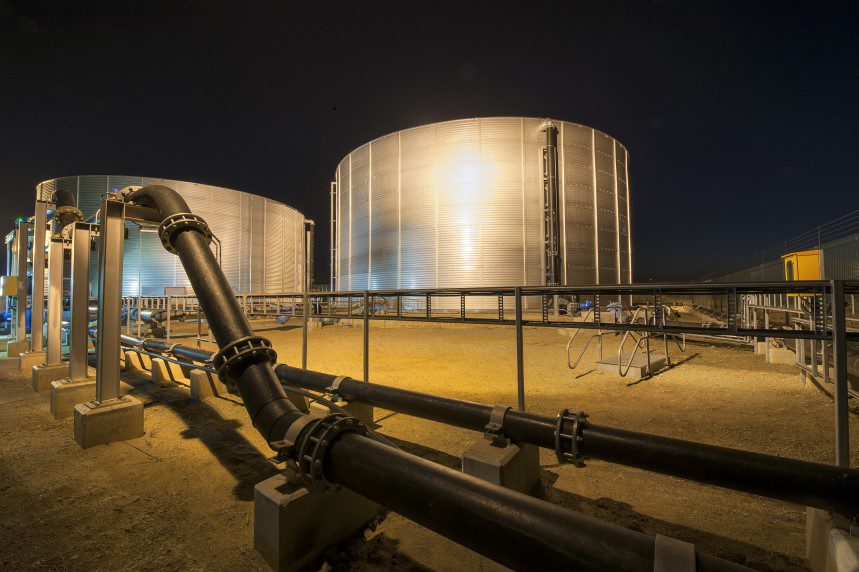
SBS Tank products and solutions are adaptable to meet both system and site requirements. Tanks can be built on a limited, expanding vertically to maximise capacity with 11 or more rings where required. This allows for maximum site usage efficiency. With a range of around 500 sizes and capacities from 7 000 litres to 4.4 million litres, SBS Tanks are suited to every stage of the process for liquid, water or effluent storage.
Processing stages
Important questions to consider are:
How many steps will the processing of water in the closed circuit require?
What is the interconnectivity requirement of the system?
The specified system needs to be designed to fit the purpose and be able to store the liquids throughout the process. SBS can assist in this process, with the company’s in-house engineering team working with mine engineers to choose the most suitable solution considering the requirements every step of the way.
Environmental conditions and storage requirements
Factors to consider in terms of on-site environmental conditions and storage requirements include:
Is the mine in a region that experiences extreme weather conditions or are there other environmental influences of concern?
What will be stored within the tank structure and does this liquid have a corrosive nature? Will on-site conditions impact the exterior of the tank structure?
The SBS Tanks Cyclonic Range is rated for regions with a high incidence of meteorological hazards, including tropical storms, hurricanes and other high-velocity events. They are designed to withstand winds of up to 240 km/h.
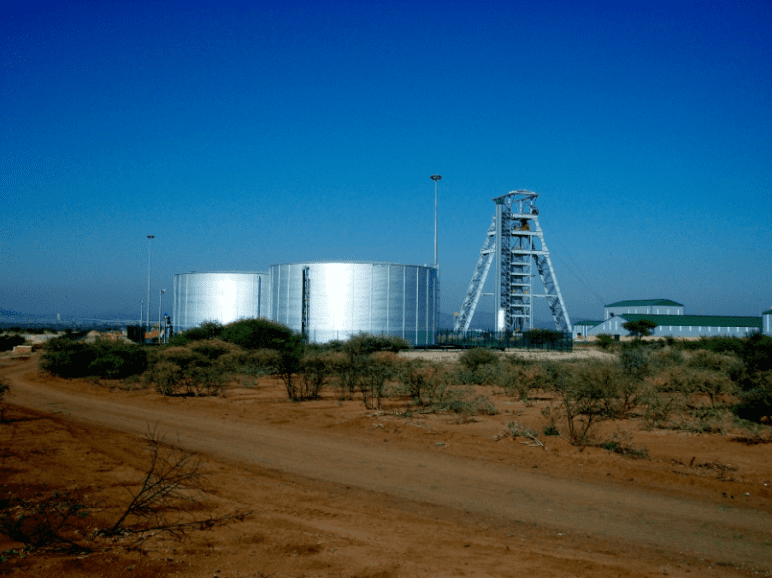
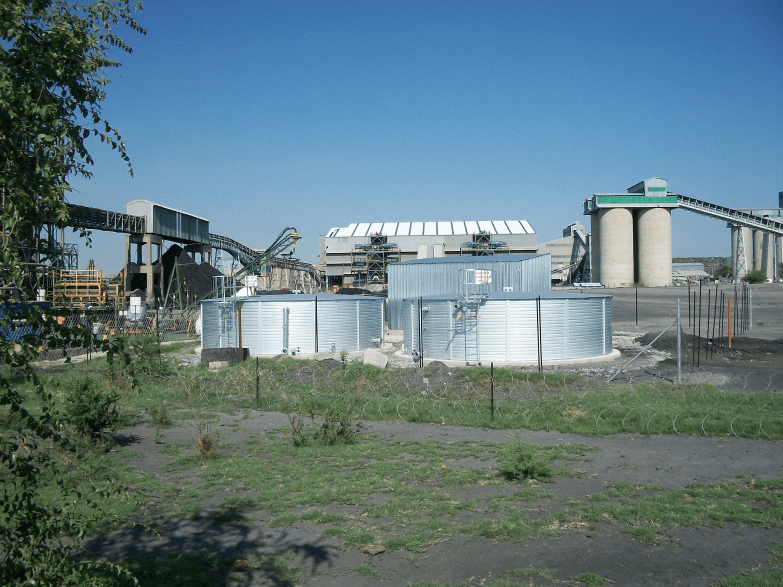
With a history of servicing the mining sector since 1999, the robust design of SBS Tanks can handle the conditions on highly demanding mine sites. Liners or bladders used inside the tank structure can be changed to suit the nature of the liquids stored within. These protect the tank structure from corrosion caused by chemical exposure. SBS Tanks typically have a minimum life expectancy of 65 years depending on on-site conditions, with liners carrying a 10-year conditional warranty.
SBS has installed tanks on mine sites for over 23 years
Installation and commissioning turnaround time
The construction of concrete water reservoirs on-site requires access roads, increasing delivery time and costs. Water is required during the construction process, which also affects costs.
SBS Tanks can be installed on a sand bed or a ring beam depending on the capacity. They take a matter of days to install and can be commissioned immediately. The modular nature of the tanks means that they can be installed in even the most remote locations and do not require heavy equipment on-site or an access road for components to be transported.
The UN anticipates that demand for water will outstrip supply by 2030. Many opportunities exist to increase water-use efficiency in all sectors and there is considerable scope for further implementation in the mining sector. As South Africa and the wider continent grow and develop, water usage will increase, and efficiencies need to be put in place to better manage resources. In acknowledging this, South Africa’s National Water Act (No. 36 of 1998) recommends a responsible approach to water management to contribute to prosperity, encouraging all consumers to adopt measures that contribute to water conservation and reduced demand.
As a trusted water and liquid storage solutions supplier to the mining industry for over 23 years, SBS Tanks will continue to work hand in hand with mines and mining engineers to offer a range of custom-designed systems to improve water-use efficiency and reduce the water requirements of the sector – through the delivery of modular and scalable solutions.
This article was first published in Inside Mining’s Resourceful Mining issue.