When Anton Paar founded his machine shop in 1922, no one imagined the one-man operation would one day become a market leader. And yet from the start, he pursued a bold, innovative approach.
A century later and the company is now a global corporation with over 3 500 employees, 45 sister companies and subsidiaries with 50 sales partners. It also has operations in more than 110 countries around the world.Small origins, big steps
Upon founding the company, Paar gave his daughters key roles: Hermine handled bookkeeping while Margareta operated in the workshop. As he gradually withdrew from the business, Margareta – at that time the first female master machinist in the Austrian state of Styria – took the lead. Her expertise in precision mechanics and manufacturing was outstanding. In 1963, Margareta’s son-in-law, Ulrich Santner, became overall manager, developing the company’s focus on measuring and analysis technology. He reached out to universities, and contributed to the transfer of new technologies from research to industry, which led to rapid expansion. A milestone was the cooperation with the Technical University of Graz in Austria, resulting in the development of the Kratky small-angle X-ray camera, the first scientific analytical instrument to be produced by Anton Paar. This approach to developing innovative technologies continues to this day, with the company providing analytical instruments across sectors – of which the mining industry is a particular focus. With mining operations being as resource-intensive as they are, optimising fleet and machinery uptime is vital. A key aspect within this is ensuring that the fuels and lubricants used to power vital plant is up to standard.Managing fuel and lubricant maintenance risks
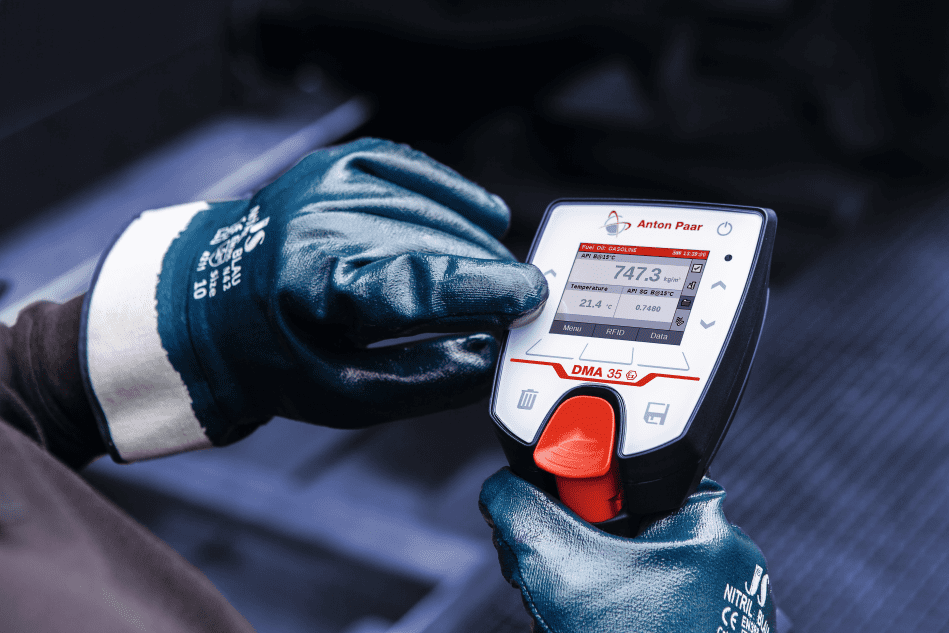
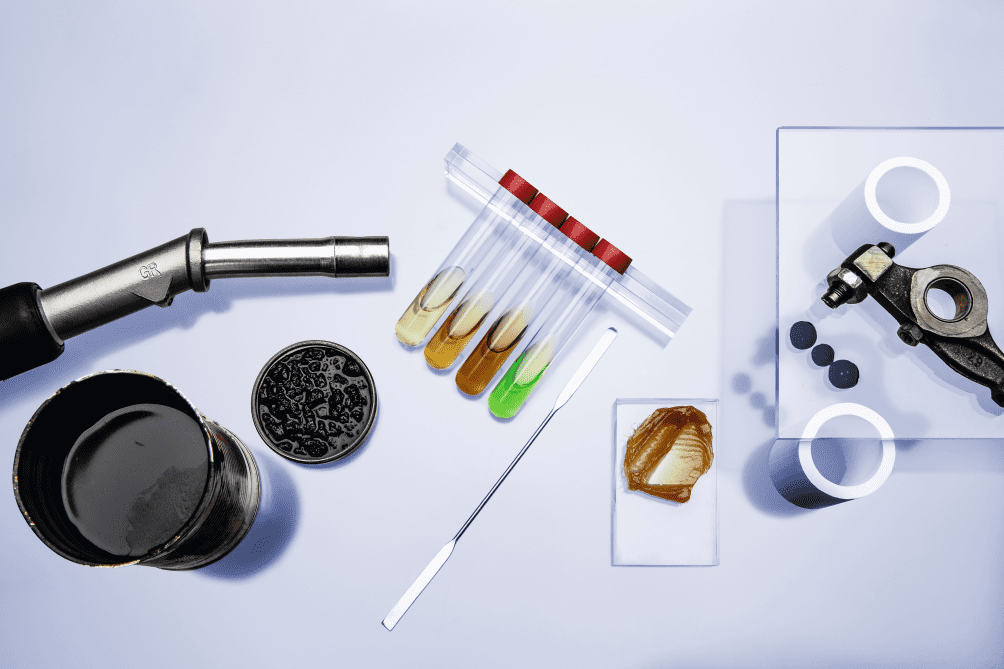
By monitoring diesel quality, maintenance management can ensure consistent and quality fuel supply for mine operations and diesel generators. Being able to detect out-of-specification or bad diesel will prevent unnecessary downtimes and costly repairs. Using the same testing equipment, it is possible to monitor used oil quality and to ensure that oil changes take place at the right time, preventing costly breakdowns and maximising machinery uptime. This also reduces costs by avoiding changing oils too early, thereby reducing maintenance expenses. Anton Paar’s broad portfolio of analysing instruments for mining and tank terminals – ranging from portable devices for use in hazardous environments to highly accurate lab instruments and inline equipment for real-time results – helps customers implement their own 24/7 lab base and perform essential tests in just a few minutes.Crude oil analysis
The company helps customers to optimise the flow behaviour of traded crude oil, which ensures good pumpability for transport. When customers choose to conduct rheological tests and viscosity measurements directly in-house, they can fine-tune their product composition without having to wait for an external partner’s help. Anton Paar offers a range of choices for this environment. Customers can start with a simple lab analysis or use an online sensor, which delivers real-time results right from the pipe, and future-proofs a terminal.
Fuel analysis
Anton Paar’s intrinsically safe portable density meters, along with its inline density and viscosity sensors, ensure faulty products are never accepted at delivery. This means customers can have peace of mind that they’re distributing excellent quality products to their end customers. Before and after transportation, Anton Paar devices can help customers assess the storage behaviour of their finished products so they can predict how they behave under certain ambient conditions. To name some analytical capabilities in this field, Anton Paar provides oxidation stability testers, which provide results 20 times faster than traditional test methods, flash point and fire point testers with integrated safety features, and an atmospheric distillation analyser with a high automation level.Lubricant analysis
With quick viscosity or density analysis, users can determine a product switch in their filling line, prevent mix-ups, fill or unload tank trucks effectively, and stop losing valuable product and money in the process. No matter if they need to monitor the exact mass of lubricants entering and leaving their terminal or ensure maximum safety during storage and transportation, Anton Paar has a range of instruments for every need (e.g. the SVM viscometer, which provides a 150 % higher throughput than manual glass capillary viscometers).