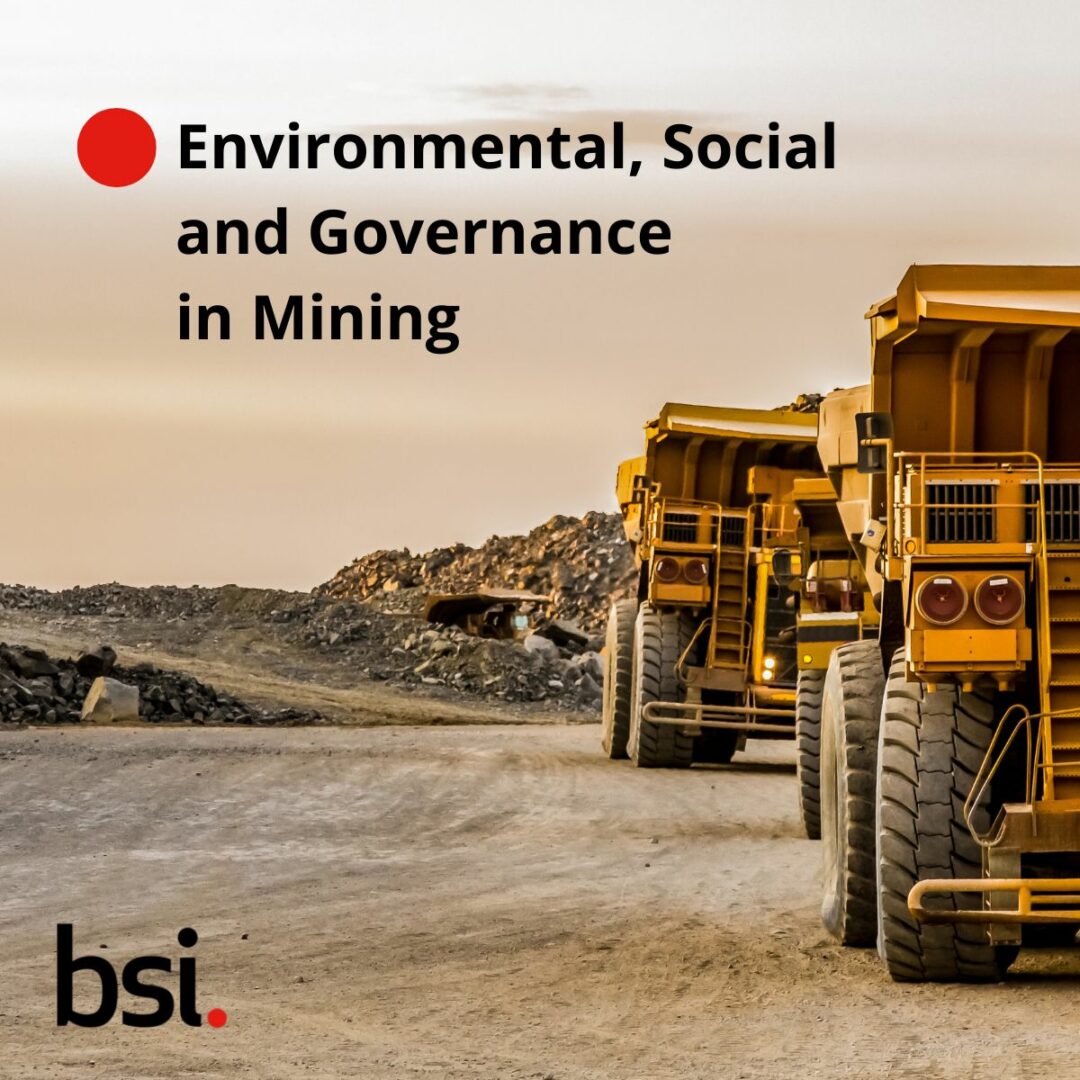
The British Standards Institution (BSI) South Africa is calling on mining organisations to tighten their ESG focus in order to meet global targets on sustainability.
With just a little over five years left to meet the UN Sustainable Development Goals (SDG17), the implementation and integration of an ESG framework in businesses are key for long-term sustainability.
Sustainability has shifted from being a buzzword to being a necessity and priority for businesses, and it is key to look at how strategy is in line with ESG framework when planning for economic growth, resilience and success in the future.
It should be noted that legal risk mitigation and sustainability investment framework are closely associated; it is now not only common practice but a legal requirement for organisations to ensure their ESG compliance. In addition, investors are increasingly required to embed ESG factors into investment processes.
The BSI has been assisting organisations with solutions which not only ensure compliance but also improve performance and embed excellence. Their global presence within 193 countries has seen them establish a compliance framework within a variety of industries and organisations.
“Compliance framework requires the inclusion of structures and processes to reduce and eventually eliminate non-compliance. At BSI we ensure this, and furthermore, will guide organisations through assessments of the efficiency of their current policies, practices, behaviors, and attitudes, and safeguard them from overlooking any gaps,” said, Theuns Kotze, BSI regional managing director.
Key measures for investors
ESG measures are key for investors, policy makers and other important stakeholders. It is a way to uphold businesses from future risks and ensure economic success and growth. Furthermore, the framework facilitates top-line growth in the long run, attracts competent staff, decreases costs and creates a sense of trust among consumers and stakeholders.
In June 2021, the department of Mineral Resources and Energy recorded the highest growth rate in the first quarter – mining recorded 18.1% growth, contributing 1.2% to the overall 4.6% seasonally adjusted and annualised GDP. This was due to increased production in the (platinum group minerals) PGMs, iron ore and gold.
“Mining companies need to set regular targets, have transparent progress reports and continuously refine their approach. Furthermore, they must demonstrate that they not only understand risks and opportunities of ESG but also display a commitment to addressing them in their day-to-day operations,” explained Kotze.
He further added that to ensure continued investment in the mining industry and cement the industry’s contribution to the national economy, it is key to look at frameworks that ensure adoption and adherence to ESG strategy. “It is important to note that ESG is not a once-off priority – it requires to be ingrained into the essence of the organization’s strategy, planning and purpose.”
In addition, BSI also guides organisations embarking on a plan to achieve enhanced resilience via sustainability where the first steps may be to achieve compliance, reduce risk and improve their brand reputation. They have a longstanding heritage of offering environmental compliance services that include environmental management, pollution, greenhouse gas management and climate change. Their offer also encompasses energy management compliance, health and safety compliance, business ethics, risk management compliance, and supply chain procurement.