By Dineo Phoshoko
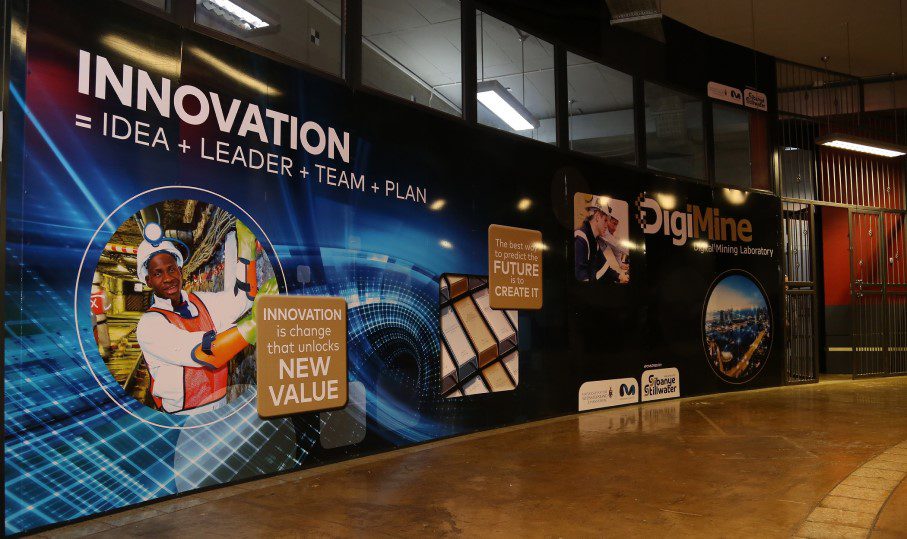
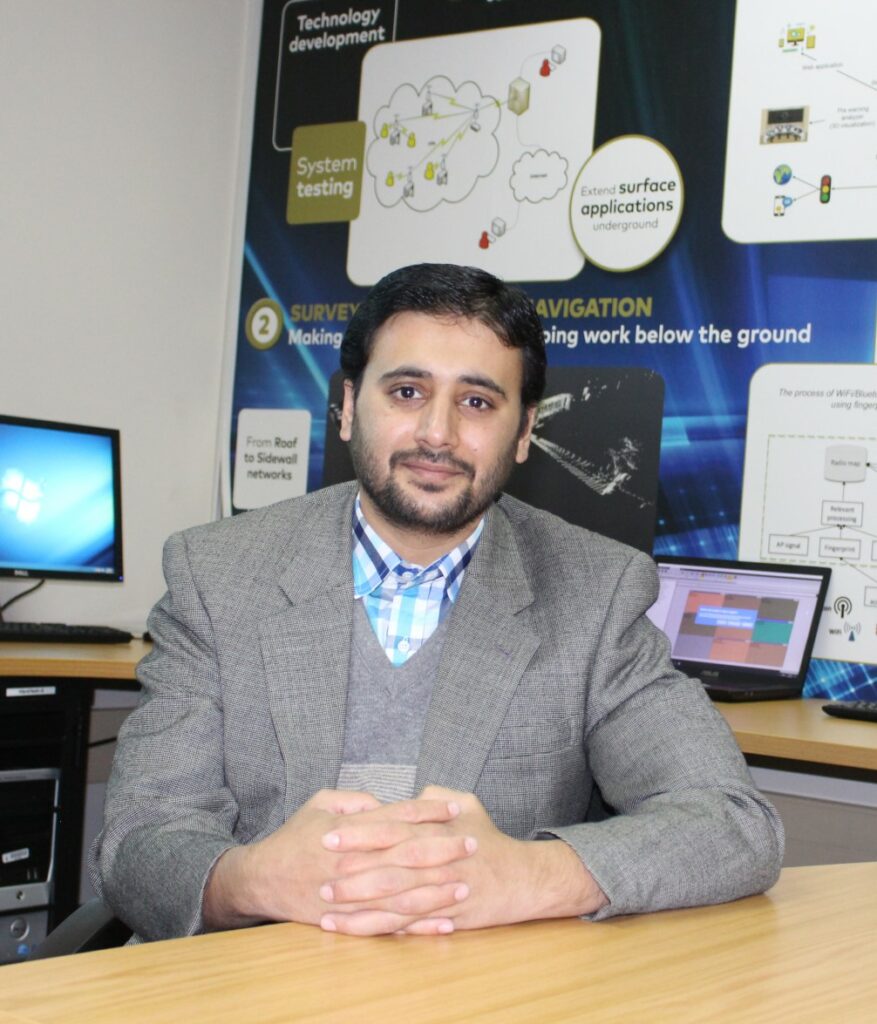
Research, innovation and development have proved to be critical in the development of technologies to improve efficiencies, productivity levels and mostly safety in the mining industry. Academic institutions have become the key to unlocking various technologies to benefit the industry. The Wits Mining Institute (WMI) is an example of an institution heavily involved in the research and innovation involved in the development of technologies in mining. In an exclusive interview with Mining News – Professor Glen Nwaila, WMI director, and Mr Ahsan Mahboob, head of the Sibanye-Stillwater Digital Mining (DigiMine) laboratory at the WMI – discuss how academia contributes to innovation and technology development in the mining industry.How innovation enables technological development
According to Nwaila, when it comes to developing technologies for the mining industry, it is important to focus more on research and innovation (R&I) rather than research and development (R&D). He explains that in previous years most mining houses had R&D divisions, but many have since closed during the 2000s. “Universities are now the central hubs where fundamental knowledge that used to be archived in dissertations is now being converted into layouts that may lead to prototypes and pilot scale type of initiatives,” says Nwaila. He further adds that universities have a fundamental role in applied research; however, moving to the next stage of prototyping and development requires partners mainly because of the high costs that are involved. “We do research, we innovate and then we need a third partner that deals with the development.” The WMI includes two facilities that were established specifically for testing technology – the Nick Holland tunnel and Sibanye-Stillwater’s intelligent boardroom at DigiMine. Working closely with technology partners, these facilities enable the development and testing of systems to see if they can perform under high-pressure conditions. Ramjack, Leica Geosystems and Schauenburg Systems are some of the companies that have collaborated with the WMI to develop innovative technologies for the mining industry. With a focus on improving health and safety and increasing productivity, Ramjack’s innovative solutions include the Ramjack Remote Operations Centre (rROC) which is a full support and knowledge transfer concept providing both on-site and remote assistance to mine resources. Another solution is the Ramjack Artificial Intelligence Lab (rAIL), a big data analytics centre created to support real-time mining decisions with rapid analytics of large, relevant data sets. Leica Geosystems specialises in laser scanners with various scanners that can be used by the mining industry. These include 3D laser scanners, an autonomous laser scanning module, and cloud processing software that processes data scanned using the sensors. Schauenburg Systems offers solutions that enable the mining industry to collect data and use it for decision-making and training. The SmartMine IoT is an IoT platform that harnesses the power of distributed cluster technologies and secured data streaming. In addition, Schauenburg Systems also has occupational health and safety solutions as well as lamp room management solutions. Mahboob believes that innovation should come before development, adding that although most of the research done is focused on South Africa’s mining industry, the WMI is collaborating with institutions outside of South Africa which are leaders in different areas of research. The institutions are the China University of Mining and Technology in China; Akita University in Japan; the Luleå University of Technology in Sweden; Uppsala University in Sweden; the National University of Sciences & Technology in Pakistan; the Geological Survey of Canada and the Beijing General Research Institute of Mining & Metallurgy also in China. “This is also a strong aspect of innovation where we can work together to not only solve national issues but at an international level as well,” says Mahboob.
Global technology trends for mining
Technology is ever-changing with different trends from time to time. Technologies in the mining industry are no different, with varying global trends. Nwaila categorises the global technology trends in the mining industry into five segments:1. Data
He explains that data has become an essential part of the way organisations conduct business. There is currently a big push by mine companies to try and find the best way to process data to get real-time information to make decisions on the spot. “There is a huge investment on the issue of data to look at what value it brings to the business, what sort of competitive advantage do companies have.” With so much data available, it becomes essential that mines can capture only key information which they need. As such, the industry requires a mechanism that continuously collects data but also filters out irrelevant data and only retains critical data that can be used to make important decisions.” For example, data can be used to warn employees at the mining operation of potential danger, therefore, preventing an incident. “Currently, if you look at the mining sector, we are producing a lot of data, but in reality, we are using less than one percent of the data for decision-making,” explains Mahboob. Although most of the data is not being used for decision-making, Mahboob notes that not all the data can be used as and when it becomes available. “We need to find a way where we can park data for some time, and then whenever it is required, we can pull the data for advanced decision-making.”2. Equipment
Nwaila mentions that the design focus used to be on robots that could perform tasks without human assistance with the help of 4IR. “People have noticed that this is not really working. We need technology that is built and tied to the 21st century skills that people have and suitable for mining environments. So instead of using machines to become autonomous in the absence of human beings, the machines are going to be tied into human activity.” This has resulted in gamification and virtual reality, where people get to learn and experience mining through playing a game.3. 21st century wireless dust
While working in the mines, workers have been exposed to diseases such as silicosis and TB from underground gold mining. Such exposure led to a historic class action lawsuit against 30 gold mining companies in 2012. After nearly six years, a settlement was reached where mine companies had to compensate affected mine workers. Since then, the industry has prioritised mine health and safety to avoid future similar scenarios. “There’s a lot of investment that was made to protect mine workers against dust, but at the same time will open a new gap for wireless dust. As you introduce new technology, this technology is radioactive. Any form of wireless communication has some sort of radiation emission that you have to be subjected to,” explains Nwaila. Some technologies have short-term effects with minimal side effects, while others could have long-term effects with more severe side effects. Nwaila notes that this aspect was missed in the process of digitalising mines. “The more wired and autonomous we are, the more we use machines that we can control from the surface; it means also that the radiation spectrum within particular areas is going to be high.” It is therefore going to be critical to ensure that baseline levels of radiation whenever equipment is being designed are taken into account to avoid similar consequences of the silica dust mineworkers used to be exposed to. “If you look at the past, workers working in the mining industry during the 90s or 80s, after two or three decades they had cases because they were affected by silica dust. We want to avoid [the same] situation in the next two to three decades, so we need to work on it now,” says Mahboob. He explains a DigiMine project that assesses the impact of wireless radiation or frequencies on human tissue. The project focuses on two important aspects: the position of the technological device and time in terms of how long it is on an individual. The hat is an example of a common wearable sensor that is worn on a person’s head. Research has shown that sensors can also be put on the torso, which will be less impactful compared to the head. Mineworkers often work long hours and therefore have wearable sensors on for a long time. Research has also shown that in conjunction with time, the temperature is another aspect to consider. “When you have the sensors frequencies, the impact is that they will raise the temperature of the tissues,” explains Mahboob. He adds that working in an environment that has a temperature as high as 52 °C means that putting on a sensor will most likely increase the body temperature in the area of the sensor.4. Blockchain technologies
Nwaila explains that many mines have implemented systems to assist in the day-to-day running of operations. It has been found that mining systems often work in silos whereby systems from different divisions of the same mine do not correspond with each other. “In the future, with blockchain technologies, it’s going to be easy to use more than two-way or multi-channel communication where data that is being generated in the mine gets automatically fed directly to the mine and metallurgical plant, but at the same time fed to the system where mining executives and corporate offices are also going to have information at the same time.”Another aspect of blockchain technology is that data can also be used for governance, whereby mine managers can keep tabs on how much product the mine produces, removing the element of theft. “Blockchain is already playing a big role in the supply chain,” says Mahboob. He explains that blockchain technology also contributes to transparency in the responsible sourcing of minerals where a record of minerals from mine to market is available.
Furthermore, there is an ESG aspect whereby stakeholder census information comes in as part of production data. “If you channel this into a multi-form of stakeholder engagement that is empowered by blockchain technologies, you’re now streamlined to say that for each and every tonne that you produce, there is also a certain amount of information that you get from how people think your brand is performing,” Nwaila says. Echoing Nwaila’s views, Mahboob says, “I strongly believe that whatever technology or research that we are doing, the technology should be people-centric. We cannot afford to lose our people.” People-centric technology considers communities, employees and even mining executives. Data can be used to understand the sentiments of communities and therefore mitigate scenarios of mine host community protests if they are unhappy about certain issues.5. Mass-scale ore sorting
Nwaila explains that in future, mining equipment is going to be designed in a way that optimises targeted ore extraction while minimising or avoiding waste mining. Rocks and minerals have unique light properties which can be used for automated mass ore sorting so that when we send the ore to the metallurgical plant, we already have a high concentration of the ore, and the remaining waste can be repurposed for by-products extraction or for landscape rehabilitation provided that all environmental and geotechnical assessments have been conducted. These efforts will contribute to future plans to eliminate tailings because tailings (or residue) storage facilities (TSFs) are actually very hazardous to the environment, dwellings and sterilise the land.” Nwaila says. Unmanned aerial vehicles (UAVs) – commonly known as drones – will play a crucial role in the mapping and monitoring of ore and waste stockpiles. Nwaila highlights in addition to operating mines, UAVs will also play a role in the exploration of minerals as well. This is particularly beneficial in scenarios where potential minerals are in areas too dangerous to send people to do the exploration. “We can now send the drones to collect very large informative data before we even drill a single borehole,” Nwaila says. Mining companies can save on costs related to mobilising drilling resources, including drill rigs. They can instead send a UAV with multiple sensors, which will identify what sort of rock types there are, which will give them an indication of whether or not there is potential for any minerals. Mahboob adds that unmanned water vehicles (UWVs) are also utilised for deep-sea mining.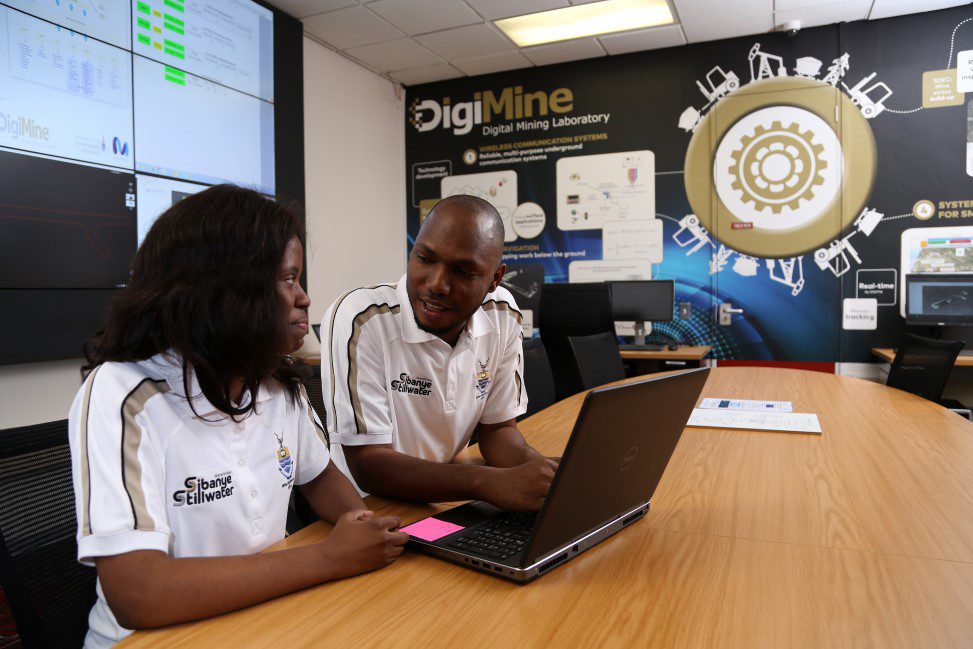
Challenges with technological innovation and development
There is no denying the many advantages that come with technological innovation and development. It is important also to acknowledge the challenges that prohibit South Africa’s mining industry from fully embracing the advantages technology has to offer. According to Nwaila, these challenges are multifaceted and include skills, money, the environment, and the management of projects. From a skills viewpoint, Nwaila says that South Africa has a skills shortage of skilled engineers and skilled scientists with capabilities of changing concepts to completed functional products or systems. R&D and R&I are very expensive. “It doesn’t matter whether it’s done by the government or the private sector,” Nwaila notes, adding that some research projects have been put on hold due to a lack of funds. He explains that even with support from industry partners who fund research projects, another challenge arises where there’s an expectation that if a company funds a university, there is an expectation that the institution will develop projects that can be deployed in the industry immediately after the research is complete. “It means you are skipping a [crucial] step of prototyping and testing. You are moving from research to implementation, and when things fail, then they say that research is not useful because of failed deliverables. I think there’s a minimal investment that is being paid with high expectations in limited or sometimes unrealistic time frames.” Nwaila highlights that countries that have been successful in innovation have invested not only money but time and skills as well. “What needs to happen is that if we have a long-term project, there have to be short-term milestones so that we don’t close a project before it reaches maturity saying that it has failed, but we can still deliver in milestones.” He adds that innovations are more affordable if the research involves multiple stakeholders. “It starts with the cheaper environment, which is the university setting. It then moves to the technology firm, which is supposed to be working with both universities and the industry, so that by the time it gets to the industry, the cost of implementation becomes cheaper.” Mining decisions that involve technology are expensive and can be risky as they involve human life and very often, irreversible environmental damage. This creates an environment where industry players tend to shy away from research, innovation and implementation because they don’t want to be labelled as the ones that experimented with people’s lives. “Mining decisions involve human life. You wouldn’t want to take a technology that is going to put humans in trouble,” Nwaila explains.Management of projects and legislation
“Most mining projects are classified into either capital projects or operational projects. But these capital projects are managed by the corporate office,” Nwaila explains. He adds that in most mining companies, there is only one person who is the head of technology responsible for all the operations; however, in the operations, there is no one responsible for technology except the responsibility that gets placed on the operations/mining managers or designated shaft/mine engineer. As a result, rather than in-house investment in technology, mines prefer purchasing technology externally to implement at their operations. They also hire resources that sometimes come from other countries to monitor the technology. Nwaila stresses that things need to change, whereby each mine must have a technology person based in the operation. Looking at legislation, Nwaila shares an experience where a coal institution rejected a proposal because the technology mentioned in the proposal had never been tested in a coal mine; therefore, it would be deemed unlawful to implement it in the coal operation. UAVs are another example of a technology that would be considered unlawful because it is not recognised by South Africa’s mining legislation. “There is no government position on the use of UAVs in an underground type of setting, especially where you have flammable types of gases,” says Nwaila. The government is falling short of playing a leading role in terms of policy position on technology and key strategic areas. This then leaves a lot of gaps because if miners implement technologies that the Department of Mineral Resources and Energy (DMRE) are unaware of, they could potentially lose their operating license if a fatal incident occurs at the mine involving the technology. To address this challenge, the WMI is establishing an industry advisory board that will operate from 2023. “With this board, we have managed to secure the DG of the Department of Mineral Resources and Energy. We also have people from the National Research Foundation.” Some of the key players who will participate in the board include the Minerals Council of South Africa and the Council for Scientific and Industrial Research (CSIR). “We want the government to be fully informed, and we’re hoping that this will help them to take a policy position on certain technologies.” The advisory board will also assist R&I institutions in establishing rules that govern how new technologies are rolled out in the mining industry. Mahboob highlights another important challenge relating to the protection of intellectual property (IP). “I think when it comes to the mining industry, particularly when it comes to saving lives and making the mine more safer for workers, we need to relook at the IP side of the technology. Trust, openness and transparency is very important,” he says. According to Nwaila, in previous years, a large percentage of patents come from universities; however, they were never developed into anything. “We need to move away from patenting just an idea that does not have any proven concept, but we need to move towards patenting the functionalities of what we are proposing.”