


0 false
false
false EN-ZA
X-NONE
X-NONE /* Style Definitions */
table.MsoNormalTable
{mso-style-name:”Table Normal”;
mso-tstyle-rowband-size:0;
mso-tstyle-colband-size:0;
mso-style-noshow:yes;
mso-style-priority:99;
mso-style-parent:””;
mso-padding-alt:0cm 5.4pt 0cm 5.4pt;
mso-para-margin-top:0cm;
mso-para-margin-right:0cm;
mso-para-margin-bottom:10.0pt;
mso-para-margin-left:0cm;
line-height:115%;
mso-pagination:widow-orphan;
font-size:11.0pt;
font-family:”Calibri”,”sans-serif”;
mso-ascii-font-family:Calibri;
mso-ascii-theme-font:minor-latin;
mso-hansi-font-family:Calibri;
mso-hansi-theme-font:minor-latin;
mso-fareast-language:EN-US;} The reason why business struggles to implement sustainability practices is that they are generally using the wrong criteria to judge their own success.
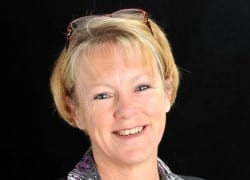
After many years of operational and managerial roles in the mining sector, this is the conclusion drawn by environmental scientist Julie Stacey, now an independent consultant, coach, lecturer and associate of Wits University’s Centre for Sustainability in Mining and Industry (CSMI).
With initial qualifications involving geology, geography and ecology, Stacey now shares her insights with business leaders in a range of sectors, highlighting the importance of their personal values in the way they run corporations.
Starting her career with a technical focus on earth- and life-sciences, she worked for the Chamber of Mines before becoming sustainable development operations manager for Anglo American plc.
Some 25 years on, she has represented the industry at policy liaison and negotiating forums such as the Southern African Development Community and the United Nations.
Other roles included the chairmanship of the Sustainable Development Forum of the Institute of Directors in Southern Africa, where she was also a Council member, and serving on two task teams of the King III Code for Corporate Governance revision process.
“The more I worked in the field,” said Stacey, “the more I realised that – while science and technology are crucial – the problems related to sustainability are caused by the criteria we use to make decisions and our choices and behaviour as individuals.”
Over time, then, her interest has moved more to the “people side” of the sustainability equation to explore personal values and assumptions, and how these find their way (or not) into corporate decisions and consumer choices.
Having evolved a widely multi-disciplinary scope to her work, she has commenced a doctorate in sociology, examining whether executive directors of publicly listed companies feel that their personal values can be brought to bear in their business decisions.
“Past research in which I was involved has shown that only 14% of directors agreed with the statement: ‘Board decisions are consistent with my personal values’,” she said.
“This, and other global research, suggested to me that many company decisions are not based on personal values, but rather those of the prevailing consumptive market, which would render the concept of corporate sustainable development a fallacy.”

