


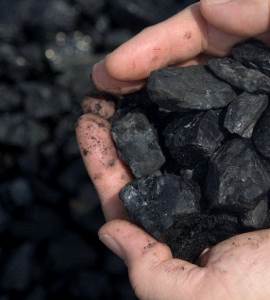
The country’s coalbed methane resources are likely to remain undeveloped if gas reserves from Mozambique and southern Tanzania overtake key markets in coming years.
This is according to Zimbabwean coal fields consultant John Holloway, speaking at the Fossil Fuel Foundation’s conference on Zimbabwe’s energy sector last week. The conference highlighted the growing need for reliable electricity in the subcontinent, fuelled by interest in Africa’s mineral resources and growing business and community demand. Speakers also examined the role of Zimbabwe’s coalbed methane (CBM) resources and Mozambique’s newly discovered gas fields. Holloway believes the extensive coal fields in the Zambezi and Save-Limpopo valleys may remain undeveloped if promising new offshore gas reserves are fully exploited. Natural coal and gas deposits have been found on both sides of the Zimbabwe/Mozambique border, representing a major new consideration in Zimbabwe’s energy plans. Zimbabwe itself has estimated open cast coal resources of more than 10 billion tonnes, in addition to newly discovered CBM resources that exceed those of the entire Southern African Development Community region. It is estimated that the Hwange/Lupane basins have over 800 million cubic metres of CBM per square kilometre. Coalbed methane has become an important source of energy in both developed and developing regions, including the United States, China and Australia. But CBM development has also been hampered by funding shortages, with most companies previously engaged in CBM exploration either having abandoned their projects or put them on hold.Holloway stressed that most coal in Southern Africa was of poor quality, with high ash content and several other features that threatened economically viable CBM development. He warned that industry observers “shouldn’t hold their breath for CBM” and rather focus on gas fields across the border.
Recent “world-class” gas discoveries in the Rovuma basin of Mozambique and lower Tanzania are set to become a source of much of the subcontinent’s energy from 10-15 years onward, said Holloway, citing Wood Mackenzie figures that showed Mozambique’s 12 successful wells had found 85 trillion cubic feet of gas. He compared Zimbabwe’s coal resources with Mozambique’s gas resources, showing that they offer similar reserves of energy (around 250 billion Gigajoules for coal and 200 billion Gigajoules for gas), but at a big cost difference. “At more or less $3 per million BTU, customers are lining up”, said Holloway of the gas opportunities, noting that two LNG compression trains and a ship loading terminal were set to be installed in Mozambique by 2018. Power generation and gas-to-liquids plants were also being planned. Faced with the possibility of accessing Mozambique’s gas reserves, Holloway said there were two major options for Zimbabwe. One is as an additional supply of electric power, as current supply remains woefully inadequate, with a shortfall of 1000 MW. Another option is installing a gas-to-liquids plant to help meet Zimbabwe’s current demand of 4.8 million litres per day, expected to increase to more than 7.2 million litres in future.
