


While iron ore and coal boasted record production volumes for the reporting period, challenging conditions in other commodities may result in future declines.
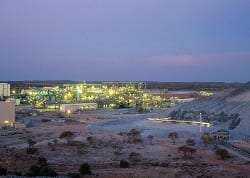
BHP Billiton issued an operational review for the nine months ended 31 March 2014 on Wednesday, reporting record production for four commodities, and at 10 operations. These included iron ore, coal and petroleum, following high production outputs at Australian operations. Aluminium and nickel performances did not shine as brightly, with aluminium production up slightly by 3% in the nine months ended March 2014, versus March YTD 2013. Production in the March quarter of 2014 increased by 6% compared to the same quarter in 2013. BHP Billiton noted that “challenging conditions in the aluminium industry continue to persist”. As a result, capacity at its Brazilian Alumar operation will be curtailed by 58 ktpa (BHP Billiton share) in the June 2014 quarter. This follows the suspension of 45 ktpa (BHP Billiton share) of capacity at Alumar in the September 2013 quarter. Nickel production remained relatively unchanged from March YTD 2013 to March YTD 2014, but did increase 19% in the March quarter this year compared to the same quarter last year. The company sees declines ahead however, due to the closure of the Nickel West Leinster Perseverance underground mine in Australia, following a suspension of operations after an earthquake hit in October last year.The Rocky’s Reward open-cut mine near Leinster will provide a temporary alternative ore supply, meaning total saleable nickel production in the region in the 2014 financial year is expected to remain broadly unchanged from the previous year. But production is set to decline by approximately 10% in the 2015 financial year, the company said.
Simplification strategy BHP also reiterated its aim to simplify its portfolio during the period, citing the successful divestment of Liverpool Bay. “In the last two years alone, the Group has announced or completed divestments in Australia, the United States, Canada and South Africa and the United Kingdom, including petroleum, copper, mineral sands, uranium and diamonds assets,” the company said. The Group’s capital and exploration expenditure also remains on track to decline by 25% in the 2014 financial year, before declining again next year. “By maintaining strict financial discipline and a focus on our four pillars of iron ore, copper, coal and petroleum, we continue to believe that an average rate of return of greater than 20% is achievable for our major development options,” said BHP Billiton CEO Andrew Mackenzie. The company also repeated comments it made on 1 April, saying it was continuing to actively study the next phase of its simplification strategy, including structural options, but would only pursue pathways that maximise value for shareholders. These comments originally came after media rumours that the company would divest of its non-core assets – aluminium, manganese, thermal coal and nickel.
