


Anglo American’s coal subsidiary, Anglo American Thermal Coal, is proving that its commitment to environmental sustainability around its operations is as important to its business as the coal it produces, writes Laura Cornish.
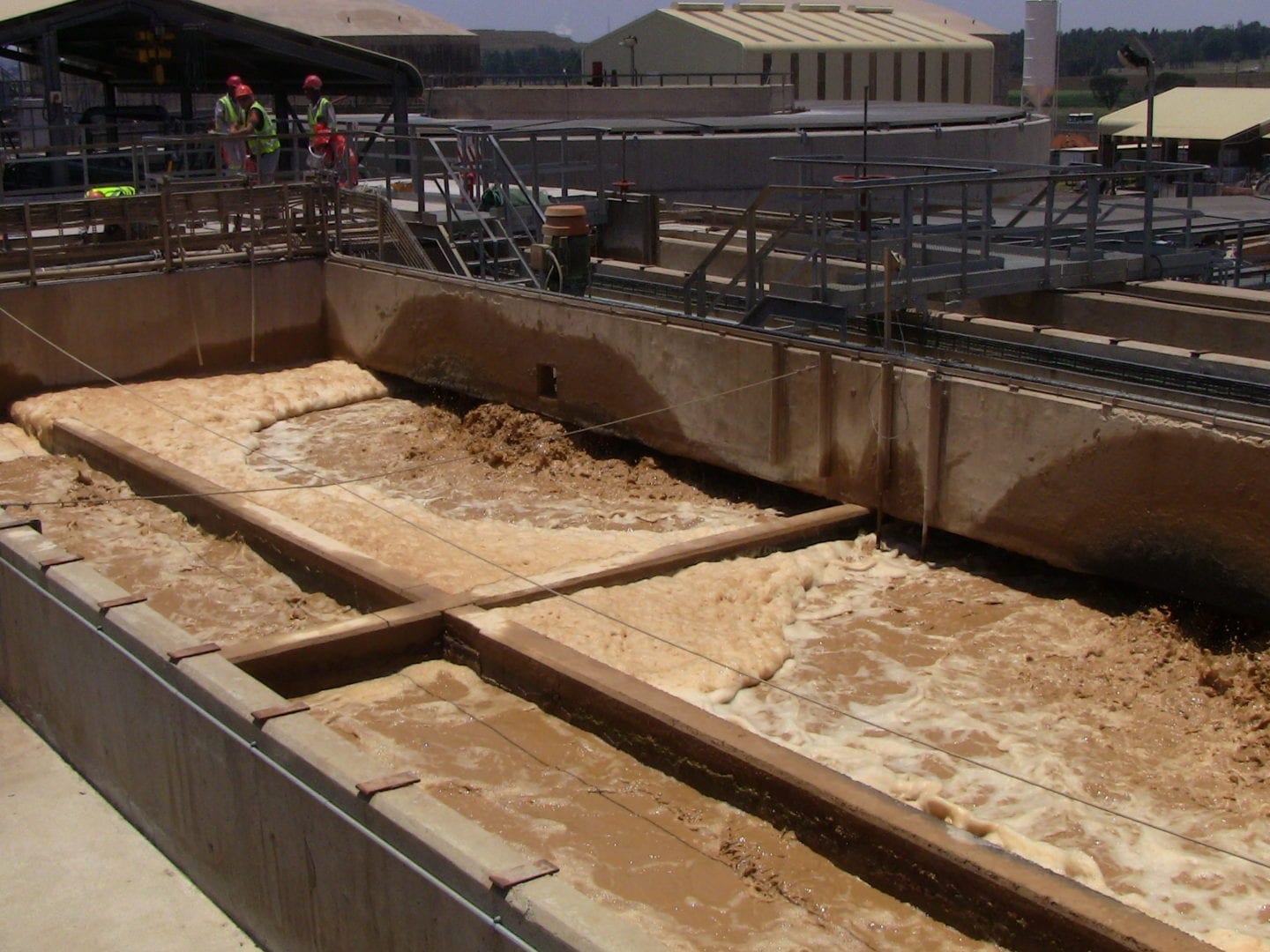
About 130 million cubic metres of water is stored in Anglo American Thermal Coal‘s underground workings; a figure that is rising every day. The birth of its award-winning reclamation plant, commissioned in 2007, was the result of the company’s desire to manage this water more effectively and efficiently using an alternate solution. Following over a decade of research and development, Anglo American Thermal Coal (AATC) approved a R300 million water reclamation project and followed this with a bulk supply agreement with the water-stressed eMalahleni Local Municipality. The result saw the global resource company simultaneously providing a sustainable mine water solution that also benefits the communities residing around its mining operations. The water reclamation plant also provides a local solution for BHP Billiton Energy Coal South Africa (BECSA), which supplies mine water to its South Witbank colliery. “Project timing could not have been better. Environmental legislation had and still continues to grow increasingly stringent for coal mining operations, particularly with regard to acid mine drainage (AMD). The need for our collieries to operate responsibly was therefore as critical as it had ever been. Those two factors, coupled with the local municipality’s cry for additional potable water has seen this plant outperform our original expectations,” says Thubendran Naidu, hydrology manager at AATC. The reclamation plant has celebrated five years of operation and, based on this success, is now undergoing a significant expansion to double its production. Phase 1 – just the beginning “It took more than 10 years to identify various suitable technologies for the plant, particularly suited to its scale, and possible future expansions. Lifecycle costs had to be considered as well. A pilot plant project was developed in partnership with Aveng Water (formerly Keyplan), which was subsequently contracted to build the main plant and thereafter operate and maintain it on our behalf,” Naidu continues. Commissioned in 2007, the plant desalinates rising underground water from AATC’s Landau, Greenside and Kleinkopje collieries, as well as from BECSA‘s defunct South Witbank mine, thereby preventing polluted mine water from decanting into the environment and the local river system. Using the latest in water purification technology, it is currently desalinating 30 Mℓ/d of mine water to potable quality, most of which is pumped directly into the municipality’s reservoirs, meeting about 20% of its daily water requirements. Additional water is piped to Greenside, Kleinkopje and Landau collieries as well as various nearby AATC service departments for domestic use and for mining activities such as coal processing. These operations are now self-sufficient in terms of their water requirements. The plant also supplies potable water to Zibulo mine, BECSA‘s Klipspruit mine and the Phola coal washing plant. “Daily stringent water quality monitoring ensures that the quality of our water meets the highest standard and is never compromised. The plant operates at a 99% water recovery rate and we are aiming for a zero waste facility through the 100% utilisation of our solid by-product. We are already not far from achieving that vision. We have undertaken and are planning more research into opportunities to reuse the nearly 200 t of gypsum-based solid by-product the plant produces daily. Phase 2: A major expansion AATC is well under way with the reclamation plant’s expansion to effectively double its capacity to 50 Mℓ/d.“The expansion has largely been driven by our Landau colliery in particular, which is undergoing its own expansion,” Naidu explains.
Plant construction commenced in September 2011 and the expanded plant is due to start operating towards the first quarter of 2014. Commissioning (in phases) will start from mid-2013. At the end of 2012, the plant was at about 60% progress, with civil construction nearing completion. Mechanical and electrical installation started in January 2013, together with the installation of the piping, pumps, control instrumentation and power supply. Naidu explains that some of the project’s key challenges include keeping to schedule and cost. “AATC is investing R732 million into the expansion.” “Safety is also key and all contractors permitted on-site must understand our non-negotiable standards. The project team has implemented a major drive on contractor engagement and visible felt leadership. Considering that the project will use up to 600 people during the construction, ensuring the safety of our people remains an ongoing challenge.” The Upper Olifants catchment, within which the plant is located, remains water stressed with a growing water demand and presents a substantial upside potential for the reclamation plant’s future sustainability. The need for water in the Bushveld Complex’s Eastern Limb – a growing mining area – holds further opportunities. “In other words, this plant forms part of our country’s national water strategy.” While the life of a mine may be finite, the need to treat and prevent acid mine drainage post mine closure is significant. The reclamation plant will provide a water treatment service indefinitely following the closure of the contributing mines. Sidebar 1: The technology (prior to expansion) Mine water (from all four mines) is pumped into to feed dams on-site. The water is treated in the plant’s first stage process where the acidity is neutralised using limestone, clarifiers settle out the solids and the clear water passes through an ultrafiltration circuit to remove fine particulate matter. The final step is reverse osmosis for desalination. The reject from this first stage passes through two more process trains to increase the potable recovery to about 99.5%. “I consider this a groundbreaking technology when one compares this plant to seawater desalination plants that achieve between a 60 to 70% recovery rate. Such high recoveries have never been achieved globally (I believe) with such a small brine stream.” The brine is stored on-site in a specially designed evaporation dam. Chlorine for final disinfection and limestone salts to balance the taste and chemical stability of the product are added into the final product before it is supplied to the consumer. The already remarkable process technology will be taken one step further when the plant is expanded – no additional brine will be produced. Despite the advanced online process control and monitoring in place, special attention is given to managing the plants feed sources and ensuring consistent and uncompromising product quality. The operation stays in touch with the mines to manage surface and underground water levels during wet and dry periods. A rigorous independent water quality monitoring programme is in place to ensure the strictest compliance to quality and the operation reports into a national database administered by the Department of Water Affairs (Blue Drop Status Reporting System). Sidebar 2: By-product solutions Over the last few years, AATC has launched research and development projects aimed at helping offset the cost of the water treatment facility and reaping further financial and environmental benefits. By-product applications for its gypsum-based material, which can be used to manufacture blocks and bricks for housing, is already proving itself to be environmentally beneficial, and useful to the community. Following the construction of a pilot house (using the gypsum bricks) on-site, another 66 houses have been built in the nearby Clewer suburb. Naidu says it is a globally accepted house-building method that has now moved into subsequent project phases. “Our aim is to build about another 500 houses, primarily for our own employees.” Ultimately, AATC will look to create a start-up entity to sell the gypsum product into a broader market. The plant produces between 180 and 200 t per day of the solid by-product material. Opportunities remain open for other by-products at this stage, including the production of sulphur, limestone and magnesium carbonate.
